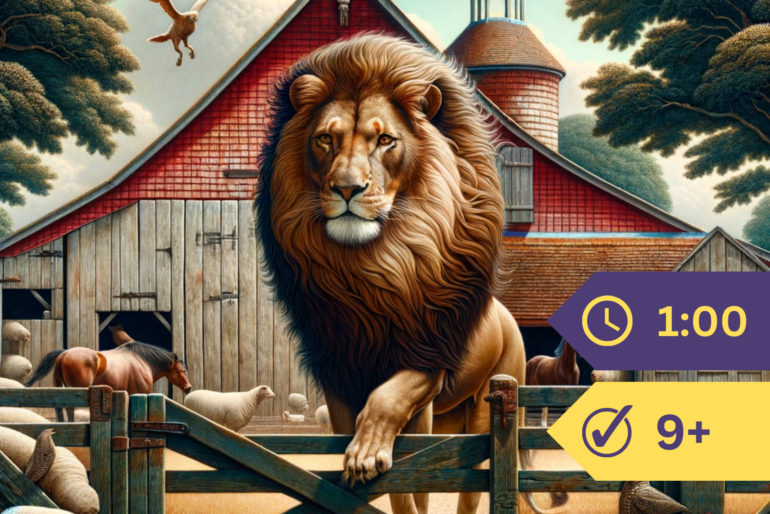
A Lion entered a farmyard. The Farmer, wishing to catch him, shut the gate. When the Lion found that he could not escape, he flew upon the sheep and killed them, and then attacked the oxen. The Farmer, beginning to be alarmed for his own safety, opened the gate and released the Lion. On his departure the Farmer grievously lamented the destruction of his sheep and oxen, but his wife, who had been a spectator to all that took place, said, “On my word, you are rightly served, for how could you for a moment think of shutting up a Lion along with you in your farmyard when you know that you shake in your shoes if you only hear his roar at a distance?”