There was a man who had the most foolish wife in the world, or thought he had—though as it turned out, the world contained several who had her well beaten.
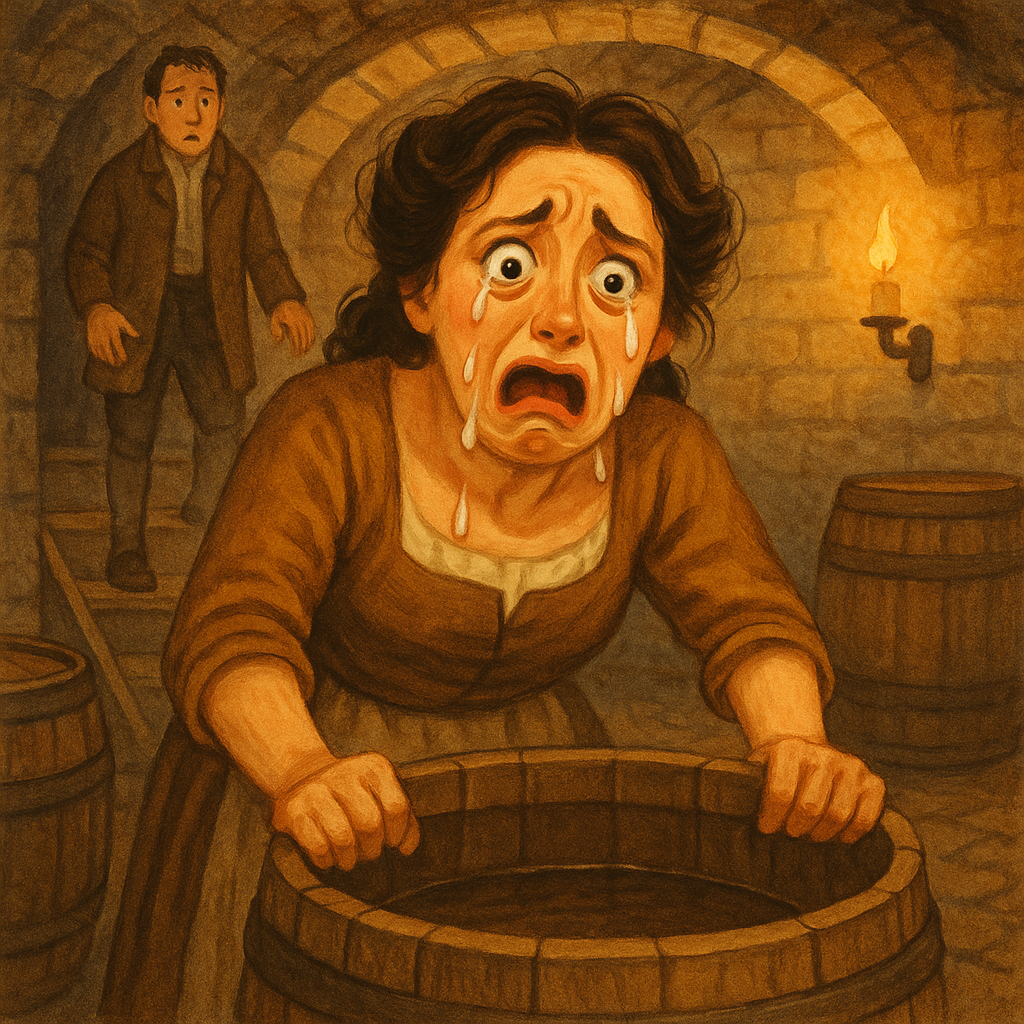
The first proof of it came when he found her weeping bitterly in the cellar over an empty barrel, imagining some catastrophe that had not yet happened and showed no signs of ever happening. When he demanded to know what she was crying about, she explained the long chain of disasters she had constructed in her imagination, each one following the last with impeccable logic, all beginning with something that had not occurred.
He stared at her. Then he went upstairs and found her struggling to put a stocking on in a way that would require considerably more leg than nature had provided. Then he found her trying to shell a walnut by a method so elaborate and hopeless that he stood watching for a full minute before she noticed him.
He could not bear it. He loved her, but he could not bear it. He announced that he was leaving, and would return only when he had found three people in the world more foolish than she was—if such people existed.
He walked until he came to a noble house, where he found a princess attempting to put on a hat in a way that made it clear she had never in her life understood what a brim was for. He walked on and found a man who had knotted a length of rope so many times, in his anxiety about it becoming loose, that it was no longer useful for anything at all. He walked on and found an old widow who was grieving for her husband, departed to the next world—and who had been persuaded by a cheerful passing stranger that her husband was in great need of warm clothing and firewood, and had handed over a considerable portion of her household stores for the stranger to deliver. When the man met the stranger on the road, still carrying the widow’s goods with a broad smile, he understood everything.
He had found his three. He turned and walked back home.
His wife was delighted to see him. And that very evening, when robbers came to lurk near the house, she baffled them so thoroughly—by dropping something very heavy on them from above, in a moment of inspired lunacy that would never have occurred to a sensible person—that they fled, leaving behind everything they had been carrying.
The man and his wife were very comfortable after that.