There was once a widow with a son who couldn’t seem to do anything right. Whatever task she gave him, he muddled it somehow. Finally, at a neighbour’s suggestion, she decided to try sending him out into the world.
She gave him a piece of linen to sell and very careful instructions. Walk straight. Don’t take less than a certain price. Don’t talk to gossiping, chattery women — sell only to someone standing quietly by themselves.
Off went the booby.
He walked so perfectly straight that he went straight past all the turnings that led to the towns. Presently a well-dressed woman — the wife of the local mayor — hailed him kindly. She was talking cheerfully with her maids.
“I’m not selling to you,” said the booby, “because you were chattering.”
She offered him twice his asking price. He refused. He walked on.
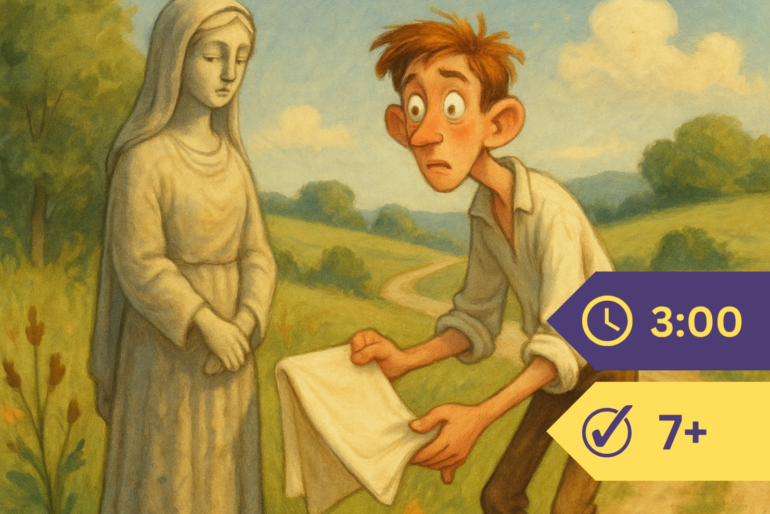
Further along the road there was a stone statue standing by itself, not chattering at all.
“Here’s the quiet sort of body my mother mentioned,” thought the booby. He sold the linen to the statue, left it propped at her feet, and went off to buy thread. When he came back, the linen was gone — someone had walked off with it — and the statue naturally had no money ready.
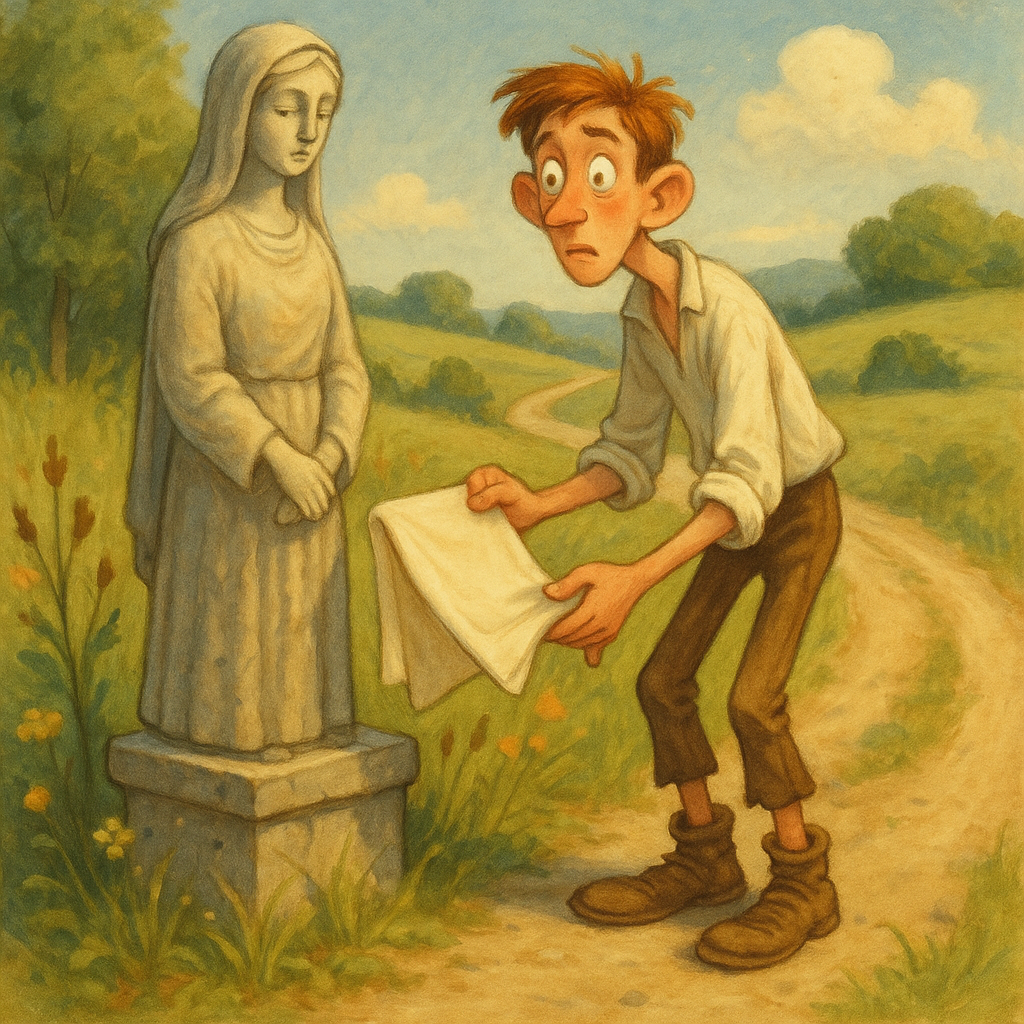
The booby asked for payment. No reply. He threatened the statue. No reply. He picked up his stick and knocked the statue’s head clean off.
The statue was hollow. It was full of gold coins.
“Oh, is that where you keep it?” said the booby, and filled his pockets and went home.
His mother, though delighted, was afraid he’d blab the secret. “Those aren’t coins,” she told him, “they’re just rusty old nails.” And she hid them in a jar and went out.
While she was gone, a rag-merchant came by. The booby, pleased with himself for having shifted the nails before, offered the merchant the jar of “rusty nails” for twelve pennies. The merchant, seeing exactly who he was dealing with, agreed at once.
The mother came home to find her fortune sold for twelve pennies.
“You told me they were rusty nails,” said the booby reasonably.
Some time after this, the mother told him to shut the door. He misunderstood — as he tended to do — and lifted the door off its hinges. When she called after him angrily, he panicked, ran into the countryside with the door on his back, and ended up climbing a tree with it.
That night, a band of robbers gathered under that very tree to count out their plunder. The booby, frightened by the sight of them, lost his grip on the door. It fell with a tremendous crash. The robbers assumed it was a police raid and fled, abandoning every bag of money.
The booby climbed down, gathered the money, and brought it home. This time his mother kept her mouth shut, hired a servant to watch him, and they lived prosperously for the rest of their days.