
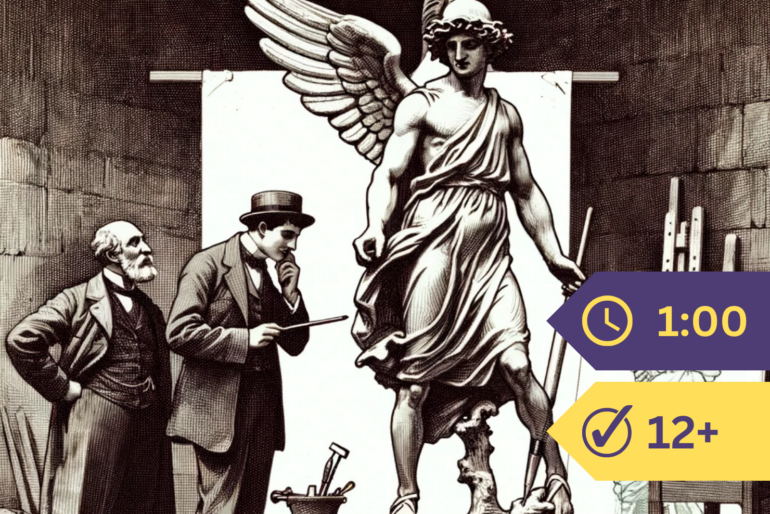
Mercury and the Sculptor

Summary


"Mercury and the Sculptor" is a short Aesop fable about the god Mercury, who disguises himself as a mortal and visits a sculptor's studio to discover how highly mankind values him. Confident he outranks even Jupiter and Juno in prestige, he smugly points to his own statue and awaits an impressive price — only for the sculptor's dry reply to deflate his pride completely. The fable delivers its sharp lesson on vanity and self-importance in just a handful of cutting lines.


Read Online

Mercury once determined to learn in what esteem he was held among mortals. For this purpose he assumed the character of a man and visited in this disguise a Sculptor’s studio having looked at various statues, he demanded the price of two figures of Jupiter and Juno. When the sum at which they were valued was named, he pointed to a figure of himself, saying to the Sculptor, “You will certainly want much more for this, as it is the statue of the Messenger of the Gods, and author of all your gain.” The Sculptor replied, “Well, if you will buy these, I’ll fling you that into the bargain.”


Credits

Aesop was an ancient Greek storyteller, believed to have lived around 620–564 BCE, whose fables have been retold across cultures for over two millennia. "Mercury and the Sculptor" is one of his many short moral tales that uses gods as stand-ins for all-too-human failings, turning divine self-importance into an easy target for wit.