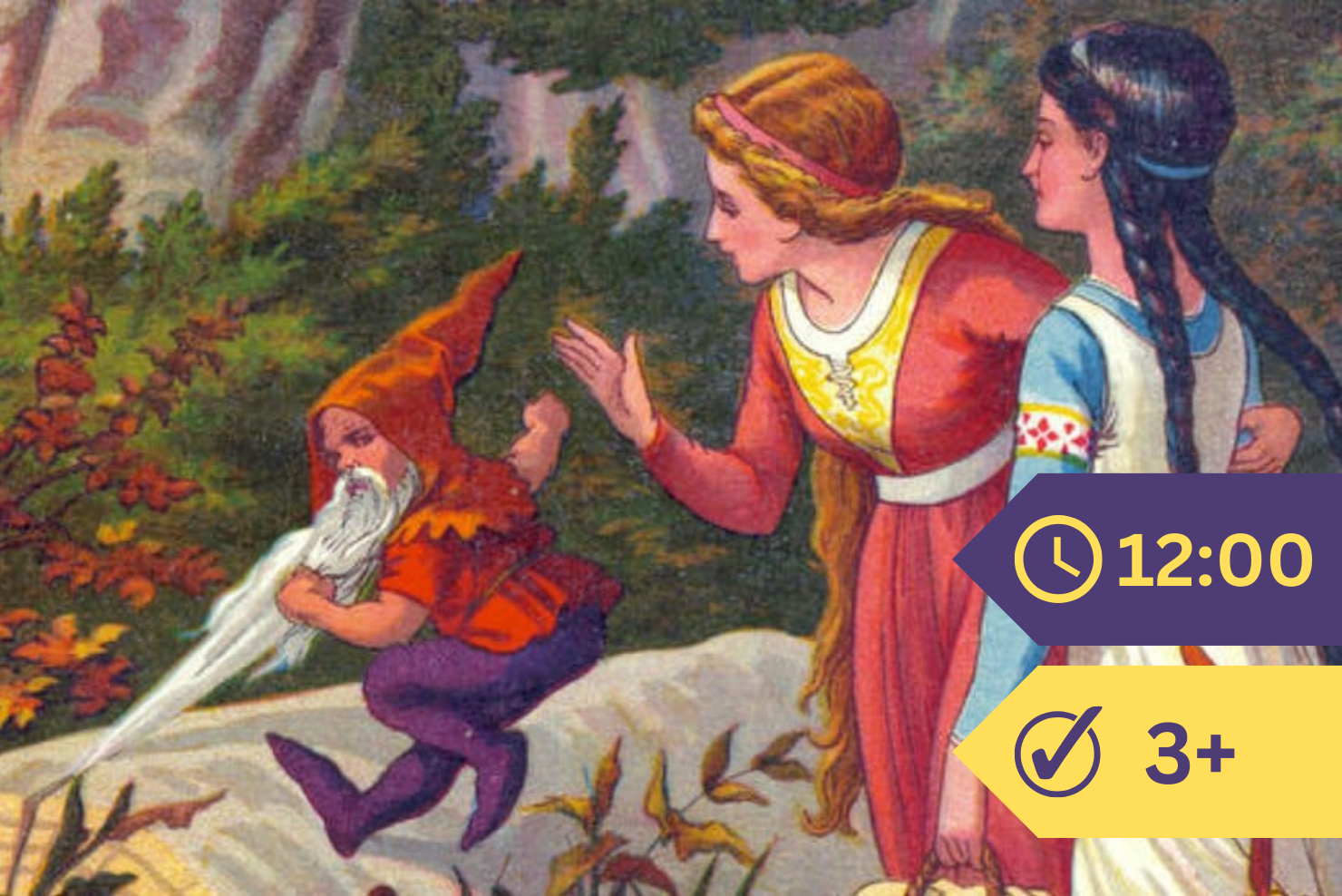
In a neat little house in an old-fashioned German village on the banks of the beautiful Rhine — with flat green meadows, broad fields, and roads lined with tall poplar trees — there lived a happy family named Lichtenfels. They had two daughters, Christine and Alice, who were the sunshine of the home, where cloudy moods were rare.
But one autumn, about a month before St. Nicholas Eve, something unusual happened — and that “something” was a worried little frown on Alice’s forehead. As she watched her sister Christine’s nimble fingers flicking the stitches on and off her shining knitting needles, Alice sighed so deeply that Christine looked up in concern.
“What’s the matter, little one?”
“I’m so afraid St. Nicholas will ask me again this year whether I’ve learned to knit,” Alice said, a quiver in her voice.
“Well, he might, Alice — he very well might. And what would you answer? Mother tried to teach you, but you wouldn’t learn.”
“I know it was naughty of me not to listen,” Alice admitted. “If I learn now, do you think St. Nicholas will forgive me?”
“I’m quite sure he will.”
“Then I’ll learn before the month is out!” said Alice, jumping up to fetch the yarn and needles.
And a pretty picture their mother found when she came into the room a while later: the two sisters seated side by side on the wooden bench, Christine’s sleeves pushed up — for it was one of those mild early-autumn days — her fair head bent low until it nearly touched Alice’s flaxen hair, her face eager and flushed as she guided the clumsy little fingers through stitches that seemed determined to slip out of line.
Patience and perseverance make fine partners, and together they usually get the job done. By the time St. Nicholas Eve came around, Alice was ready to enjoy it with an untroubled heart.
That evening, small wooden-shod feet pattered up to the window of the conditorei — the confectioner’s shop — to buy a chocolate shoe and gaze at the beautiful picture-cakes on display: enormous roosters with flowing tails and proud crests, ladies in ruffled collars, knights in armour with sword and lance, and — most often of all — St. Nicholas himself on his white horse. These cakes were made by pressing dough firmly into deeply carved wooden moulds, so that each one took on its shape before being baked.
Most plentiful of all were the little candy shoes, usually made of brown chocolate trimmed with white rosettes. Every child hoped to have one, ready to hold food for St. Nicholas’s white horse when the good saint came in the night with his gifts — and sad was the heart of any child who couldn’t find a single coin to buy one.
One such child stood close to Christine and whispered that she couldn’t afford a chocolate shoe, so she had shaped one out of a potato instead, and would put the oats in that — adding, anxiously, that she hoped St. Nicholas wouldn’t be angry.
“Of course he won’t!” said Christine warmly. “He’ll know you did your very best — and that’s all any of us can do.”
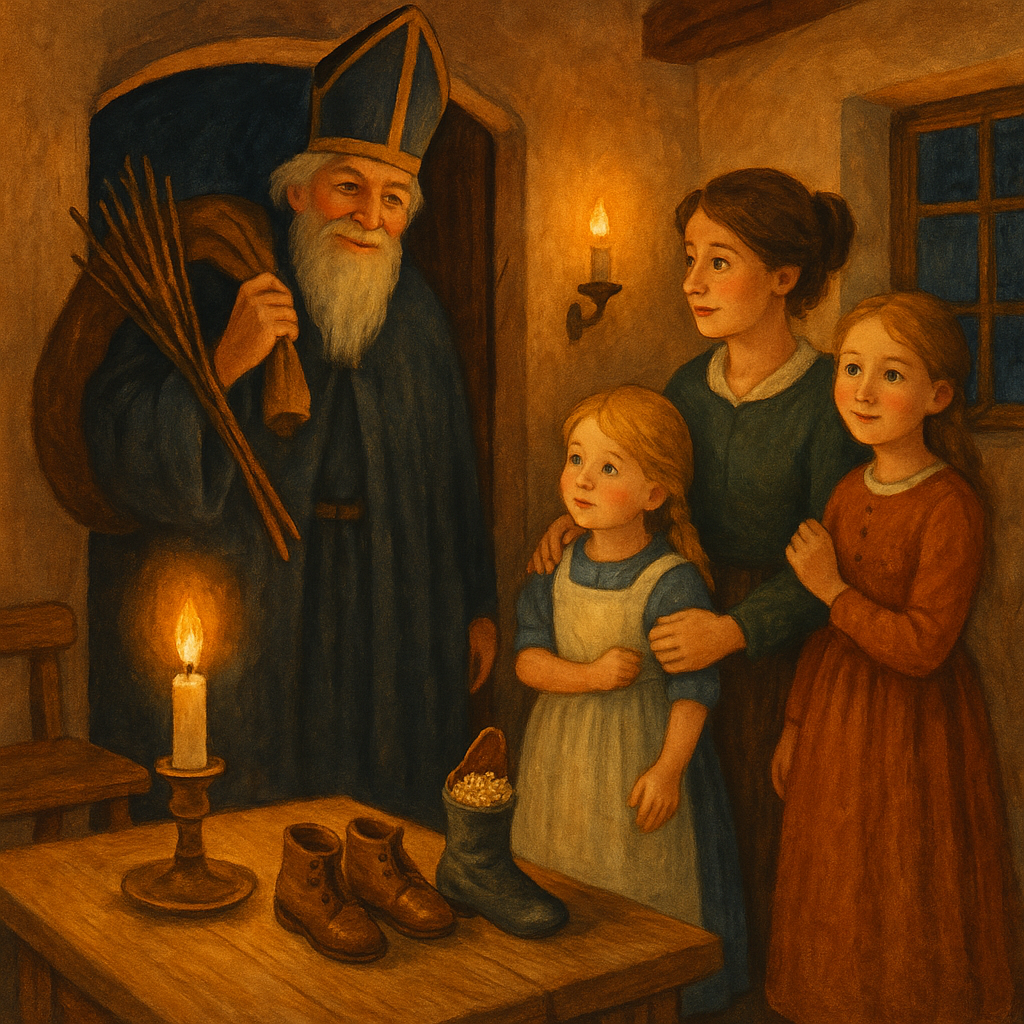
That night, all through the little village, children were in a happy fever of excitement — filling their shoes with rye and oats and sugar for the white horse, and polishing their own shoes until they gleamed like mirrors. Both were set out on a table beside their beds, next to the chocolate shoes. All this was done with hearts in their mouths, for at any moment they expected to hear St. Nicholas’s bell.
At last it came — ting-a-ling-ling — ringing clear through the still night air. The mother opened the door and welcomed him in. Over one shoulder he carried a long, well-filled sack, and in his hand, a bundle of rods.
He bowed graciously and explained that, since Christmas was so near, the Christkind — the Christmas Child — had sent him to visit every home and see where gifts should be brought on that happy day. Then he turned to little Alice, who clung trembling to her mother’s arm, and asked whether she had yet learned to knit. A smile crossed his face when she almost shouted, in her excitement and earnestness, “Yes! Yes, good St. Nicholas!”
He assured her that she — and all the good children — would find a gift from his sack beside their beds in the morning, as a promise that on Christmas Eve still more beautiful presents would come.
The morning had scarcely dawned before the village children began to peep about — and alas for the naughty ones, who found only a bundle of sticks! But the good boys and girls were delighted by the picture-cakes gleaming on the little stands beside their beds. Laid carefully across the top of Alice’s shoe was a large cake shaped like a stocking, marked: “For the little girl who has learned the useful art of knitting.” And in a poorer corner of the village, the potato shoe was filled with the sweetest of sweets, with a small card beside it that read: “She did the best she could.”
When Christmas Day itself arrived, with all its hopes and excitement, St. Nicholas’s promises came true. The Christkind remembered every good child with generous and beautiful gifts — and the birch rods left behind by old Pelznickel helped, we may suppose, to keep the naughty ones in line the following year.
But you know, the most admirable goodness of all is not the kind that grows out of hoping for a reward or fearing a punishment.
So may this glad Christmas find you — and keep you — good, simply because it is right to be good.