
Yei Theodora Ozaki
Dive into Yei Theodora Ozaki’s enchanting Japanese fairy tales and folk stories — read them online for free, filter to discover your favorites, and explore our article to learn more.
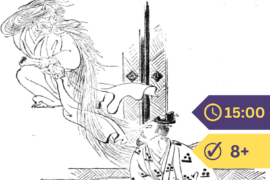
Yei Theodora Ozaki (1871–1932) was a British-Japanese writer and translator best known for bringing traditional Japanese folklore to English-speaking audiences. Born to a Japanese father and a British mother, Ozaki occupied a rare cultural position that gave her both intimate familiarity with Japanese storytelling traditions and the literary English to render them with grace and clarity. Her most celebrated work, Japanese Fairy Tales, published in 1903, remains one of the most widely read collections of Japanese folk narrative in the English language.
Ozaki did not simply translate her source material word for word; she adapted and retold the old stories in a flowing, literary style suited to Western readers while preserving the spirit, imagery, and moral weight of the originals. Her work drew on classical Japanese texts and oral traditions, introducing characters ranging from noble samurai and cunning foxes to fearsome supernatural creatures. Among the memorable tales in her collection is The Ogre of Rashomon, a vivid story set in the ancient capital of Kyoto, where a terrifying ogre haunts the great gate at twilight and preys upon those who dare to pass. The tale centers on a bold warrior who resolves to confront the creature, and it captures the blend of courage, cunning, and the uncanny that runs through so much of classical Japanese legend.
The Gate of Rashomon itself is one of the most resonant settings in Japanese literary and cultural history, and Ozaki’s retelling reflects her skill at grounding supernatural narratives in real historical atmosphere. Her stories frequently feature this tension between the earthly and the otherworldly — a quality central to the Japanese folk tradition she devoted herself to documenting and sharing.
Ozaki’s contribution to cross-cultural literature was significant at a time when Japanese culture was still relatively little known in the English-speaking world. Her retellings helped shape how early twentieth-century Western readers understood Japanese myth, morality, and imagination. Though scholarship has sometimes noted the degree to which her adaptations reflect Edwardian literary tastes alongside authentic Japanese sources, her collections endure as accessible and evocative entries into a rich storytelling tradition.