
W. W. Jacobs
Dive into W. W. Jacobs’ complete short stories and discover his masterful blend of dark suspense and everyday life — read them online for free, filter to find your favorites, or explore our article to learn more about the author.
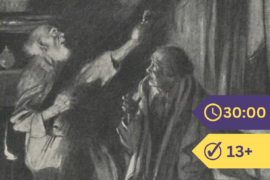
W. W. Jacobs (William Wymark Jacobs, 1863–1943) was an English short story writer and novelist, born in Wapping, London. He grew up near the docks of the Thames, an environment that would deeply shape his literary imagination. Though he spent much of his career writing comic tales about sailors and dockside characters, he is remembered today almost exclusively for his contribution to horror fiction — a genre he visited rarely but with extraordinary impact.
Jacobs worked as a civil servant before establishing himself as a writer, publishing his work regularly in magazines such as The Strand and Today. His comic stories, collected in volumes such as Many Cargoes and Odd Craft, drew on the speech and habits of working-class seafarers and were widely popular in his own time. These lighter works displayed a precise ear for dialogue and a talent for gentle irony — skills that would prove devastating when turned toward darker material.
It is The Monkey’s Paw, first published in 1902, that has secured Jacobs a permanent place in the canon of horror and supernatural fiction. The story follows the White family, who come into possession of a mummified monkey’s paw said to grant three wishes — each fulfilled with terrible, unforeseen consequences. Set almost entirely within the cramped domesticity of Laburnam Villa, the tale achieves its horror not through spectacle but through restraint: what is implied and left unseen proves far more disturbing than anything explicitly described. The knocking at the door in the story’s climax remains one of the most effectively terrifying moments in English short fiction.
The influence of The Monkey’s Paw on subsequent horror and fantasy literature has been considerable. Its structure — the wish granted in the most literal and ruinous way possible — became a foundational template for countless later stories, films, and television episodes. Stephen King has cited the story as a direct influence, and its central mechanism of cursed wish-fulfillment appears throughout popular culture to this day. Jacobs himself reportedly expressed surprise at the story’s enduring fame, having regarded it as a minor piece within his broader output. That modesty notwithstanding, the tale demonstrates a mastery of pacing, tone, and psychological tension that places it among the finest examples of the form.