
Valery Carrick
Dive into Valery Carrick’s complete collection of animal fables and folk tales, and read them online for free — filter to find your favorites or explore our article to learn more.
Valery Carrick (1869–1942) was a British-born illustrator and author who spent much of his career in Russia, where he became closely associated with Russian folk literature and children’s storytelling. Working in the late nineteenth and early twentieth centuries, Carrick is best known for his retellings of traditional Russian tales aimed at young readers. His dual role as both writer and illustrator gave his books a distinctive character, combining lively prose with expressive, humorous artwork.
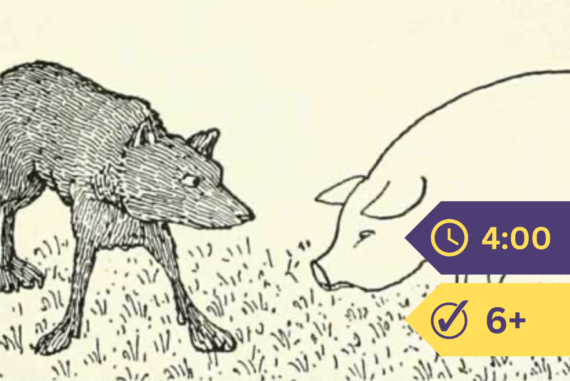
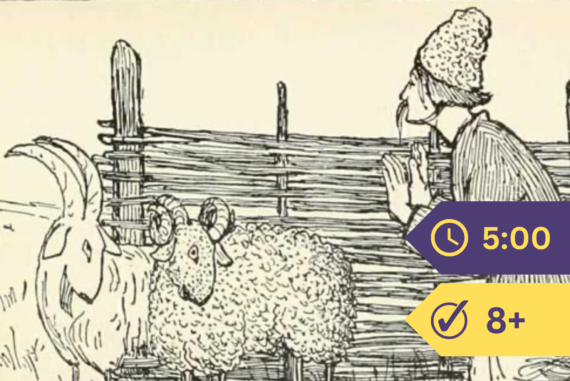
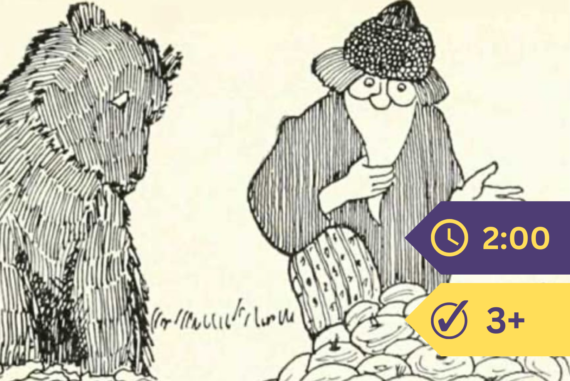
Carrick’s stories draw heavily from the Russian folkloric tradition, populated by familiar animals whose interactions reflect human follies and social dynamics. In The Hungry Wolf, a predator’s bluster is repeatedly outmatched by the cleverness of his intended prey — a recurring motif in folk literature that Carrick handled with dry wit and narrative economy. Similarly, The Goat and the Ram follows two animals cast out by their owners who must rely on cunning to survive, blending comedy with an undercurrent of self-reliance. The Farmer and the Bear presents another classic pairing of human and animal interests, where negotiation and trickery drive the plot forward in the tradition of Russian peasant tales.
Across these stories, Carrick’s style is marked by directness and accessibility. His sentences are short and propulsive, suited to reading aloud, and his animal characters are drawn with enough personality to carry moral weight without heavy-handed didacticism. The tales operate within well-established folk structures — repeated encounters, escalating stakes, and satisfying resolutions — yet Carrick’s retellings feel fresh rather than mechanical, suggesting a genuine feel for the rhythm of oral storytelling.
Carrick published several collections of these adapted tales in English, making Russian folk material accessible to audiences outside Russia during a period when interest in Slavic culture and literature was growing in Western Europe. His work occupies a modest but genuine place in the history of children’s literature, representing an early effort to bridge folk traditions across linguistic and cultural boundaries through illustrated storytelling.