
Thomas Gray
Dive into Thomas Gray’s complete poems and explore his meditative verse — read the full article to learn more about the author and filter to find your favorites.
Thomas Gray (1716–1771) was an English poet, letter-writer, and scholar of the eighteenth century. Though he produced a relatively small body of verse, he is considered one of the most important figures of the transition between the Augustan and Romantic periods in English literature. Gray spent much of his adult life at Cambridge University, where he was a fellow and later Professor of History and Modern Languages. His careful, learned approach to writing meant he published sparingly, but each work he released was crafted with considerable precision and depth.
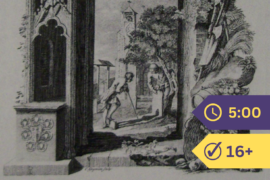
Gray is best known for his meditative and melancholic poetry, which frequently explores themes of mortality, solitude, obscurity, and the quiet dignity of ordinary life. His verse draws on classical learning while reaching toward a more personal and emotional register that anticipates the Romantic poets who followed him. His most celebrated poem, Elegy Written in a Country Churchyard, was composed over several years and published in 1751. Set at dusk in a rural English graveyard, the poem meditates on the lives of humble village people buried there — lives lived away from fame, power, and historical record. Its opening image of a plowman making his way home as darkness falls over the landscape establishes a mood of quiet contemplation that the poem sustains throughout.
The Elegy Written in a Country Churchyard was an immediate success upon publication and remains one of the most quoted poems in the English language. Lines such as “Full many a flower is born to blush unseen” have entered the broader cultural vocabulary as expressions of unrecognized potential and forgotten lives. The poem’s democratic sympathy — its insistence that the obscure rural dead deserve as much reflection as the celebrated and powerful — gave it a wide and lasting appeal across social classes and literary traditions.
Beyond this single masterwork, Gray’s other poems, including his Pindaric odes and translations from Norse and Welsh bardic traditions, demonstrate the breadth of his literary and scholarly interests. He was a pioneer in bringing older vernacular traditions into English poetry at a time when classical models dominated. His influence on later writers, from William Blake to William Wordsworth, is well documented, and his place in the history of English verse is secure not through volume but through the sustained quality and originality of what he chose to write.