
Sir George W. Cox
Dive into Sir George W. Cox’s complete collection of myths and legends — read them online for free, filter to discover your favorites, or explore our article to learn more about the author.
Sir George W. Cox (1827–1902) was a British scholar, historian, and mythographer who dedicated much of his literary career to the study and retelling of classical mythology. Working in the Victorian era, Cox was deeply influenced by the comparative mythology movement, particularly the theories of Max Müller, which interpreted ancient myths as reflections of natural phenomena such as the rising and setting of the sun, the changing of seasons, and the forces of sky and storm. This framework shaped nearly everything Cox wrote about the ancient world.
Cox produced a substantial body of work aimed at making the myths of Greece accessible to general readers and younger audiences alike. His retellings do not merely summarize ancient sources — they interpret them, drawing out symbolic meanings and connecting individual stories to broader patterns in world mythology. His most influential works include The Mythology of the Aryan Nations (1870) and Tales of Ancient Greece, through which he brought classical legends to a wide readership in an era of keen popular interest in antiquity.
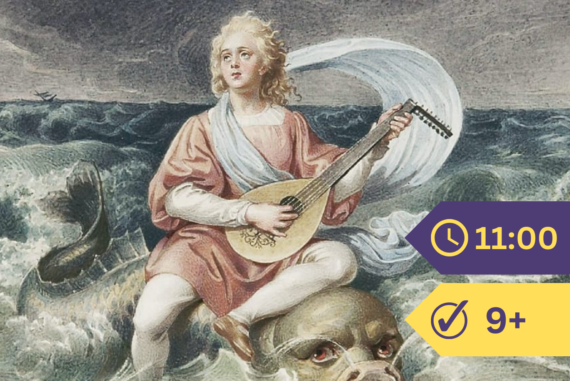
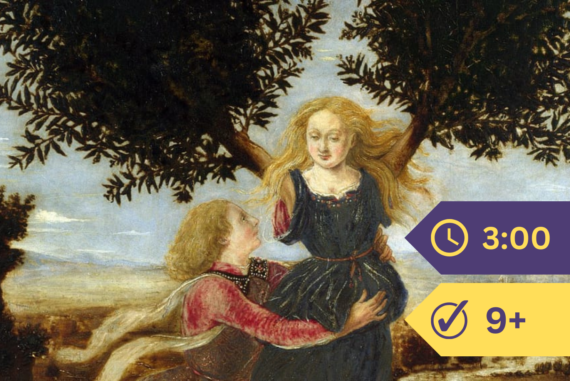
The stories attributed to Cox on this page reflect his characteristic approach: grounding myth in landscape and natural imagery while rendering ancient figures with a quiet, contemplative dignity. In Daphne, the child of the morning, the myth of the nymph Daphne is framed through the imagery of dawn and sunlight, consistent with Cox’s solar interpretation of Greek legend. Similarly, The Story of Arion recounts the celebrated tale of the musician of Corinth, whose gift for song on the golden harp captured audiences across the ancient world — a story Cox uses to explore the civilizing power of art and beauty.
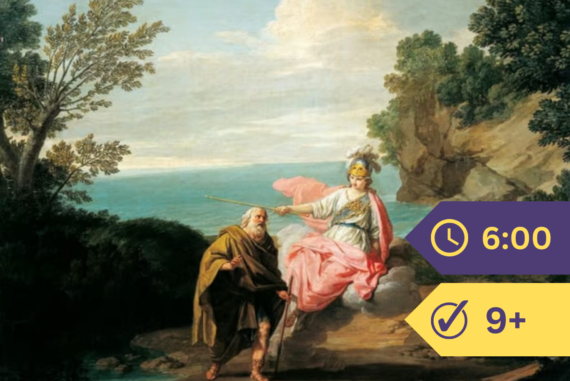
In The Gift of Athena, Cox turns to the founding mythology of Athens, centering on the city built by Erechtheus near the stream Kephisos and the divine patronage of the goddess Athena. The story exemplifies Cox’s interest in myths as explanations for cultural origins — why certain cities were great, why certain arts flourished, and how divine favor was understood to shape human destiny.
Cox’s place in literary history is that of a skilled Victorian popularizer of classical material, one who brought scholarly ideas about myth and language to readers who might never encounter the original Greek sources. His work sits at the intersection of folklore, classical scholarship, and Victorian prose literature, and continues to be of interest to those studying how the nineteenth century understood and transmitted the ancient world.