
Siegfried Sassoon
Dive into Siegfried Sassoon’s poetry and verse, including his haunting WWI-era works — read online for free, filter to find your favorites, or explore our article to learn more.
Siegfried Sassoon (1886–1967) was a British poet and author whose work emerged from one of the most turbulent periods in modern history. He is best known for his searing, often satirical poetry written during and after the First World War, in which he served as a British Army officer. His unflinching depictions of the trenches, the suffering of soldiers, and the complacency of those far from the front lines gave his writing a moral urgency that set him apart from many of his contemporaries.
Sassoon’s literary career extended well beyond the war years. He was also a prose memoirist of considerable skill, drawing on his own experiences in works that blend autobiography with fiction. Yet it is his poetry for which he remains most widely studied and remembered. His verse is marked by sharp imagery, psychological tension, and a refusal to romanticise violence or sacrifice. Where other poets of the era reached for grandeur, Sassoon often reached for the specific and the disturbing.
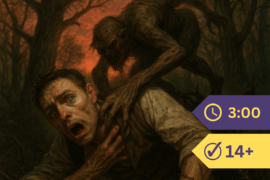
Among the works collected here, Haunted offers a striking example of Sassoon’s lyrical intensity. Set against a brooding natural landscape — a parched wood, a stilled pool, the absence of birdsong — the poem builds a mood of unease that feels both deeply personal and quietly universal. It demonstrates Sassoon’s ability to use natural imagery not merely as backdrop, but as an extension of psychological and emotional states, a technique central to much of his verse.
Sassoon was also a prominent public figure in literary and social circles of early twentieth-century Britain, counting among his friends and associates writers such as Robert Graves and Wilfred Owen. His open protest against the continuation of the war in 1917 — a statement that risked serious consequences — further cemented his reputation as a poet of conscience rather than simply craft. His legacy endures in university curricula, anthologies of war poetry, and the broader cultural memory of what the First World War cost those who lived through it.