
Robert Burns
Dive into Robert Burns’s complete poems and stories — read them online for free, filter to discover your favorites, and explore our article to learn more.
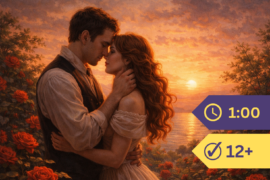

Robert Burns (1759–1796) was a Scottish poet and lyricist widely regarded as the national poet of Scotland. Writing in both Scots dialect and English, he drew heavily from the rural landscapes, folk traditions, and everyday lives of ordinary Scottish people. Burns came from a farming background in Ayrshire, and that grounded, working-class perspective shaped nearly everything he wrote. His influence on Scottish literature and cultural identity has been profound and lasting, and his birthday on January 25th is still celebrated worldwide as Burns Night.
Burns is perhaps best known for his lyric poetry, much of which set existing folk melodies to new words or preserved older Scottish songs that might otherwise have been lost. His most celebrated poem, A Red, Red Rose, captures romantic devotion with striking simplicity — comparing his love to a newly bloomed rose and a sweetly played melody, and pledging faithfulness across vast distances and time. The poem’s directness and emotional sincerity have made it one of the most quoted love poems in the English language.
Beyond his lyric verses, Burns also worked with folk narrative and supernatural themes rooted in Scottish rural culture. Halloween Love draws on the traditions and superstitions associated with the Scottish Halloween, set against the backdrop of the village of Cassilis Downans, where fairies dance and the night carries a sense of mischievous magic. This reflects a broader thread running through Burns’s work: a deep engagement with Scottish folklore, seasonal ritual, and the communal life of village communities.
Burns wrote prolifically across a relatively short life, producing songs, satires, epistles, and narrative poems. His satirical work took aim at religious hypocrisy and social inequality, while his songs celebrated love, friendship, and nature with warmth and wit. His poem “Auld Lang Syne” became a global tradition sung at New Year, further cementing his place not just in Scottish but in world literary culture. Burns’s ability to blend local dialect with universal sentiment remains one of the defining qualities of his literary legacy.