
Robert Browning
Dive into Robert Browning’s complete poems and dramatic monologues, read them online for free, filter to discover your favorites, or explore our article to learn more.
Robert Browning (1812–1889) was one of the most significant English poets of the Victorian era, widely regarded as a master of the dramatic monologue — a poetic form in which a single fictional or historical speaker reveals their character, psychology, and circumstances through their own words. Born in Camberwell, London, Browning developed an early passion for poetry and languages, and over the course of his career produced a body of work that profoundly influenced later poets, including Ezra Pound and T.S. Eliot.
Browning is perhaps best known in literary circles for his collection Men and Women (1855) and the ambitious verse novel The Ring and the Book (1868–69), but his shorter dramatic poems remain among the most studied and discussed works in the English poetic tradition. His writing is characterized by psychological intensity, morally ambiguous narrators, and a fascination with the darker recesses of the human mind. He frequently placed his speakers in moments of crisis, confession, or self-justification, allowing readers to piece together uncomfortable truths from unreliable testimony.
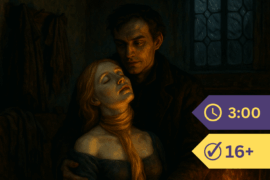
Among the most striking examples of this technique is Porphyria’s Lover, an early poem published in 1836. Narrated by an unnamed man who strangles the woman he loves in order to preserve a single perfect moment of her devotion, the poem is a chilling study in obsession and distorted logic. The narrator recounts the act with unsettling calm, convinced he has done no wrong — a formal composure that makes the poem’s content all the more disturbing. It stands as one of the earliest and most effective dramatic monologues in English literature, demonstrating Browning’s ability to inhabit a deeply troubled consciousness with clinical precision.
Browning’s literary reputation grew substantially after his marriage to poet Elizabeth Barrett in 1846, and the couple lived in Italy for much of their life together, an experience that deepened Browning’s engagement with Renaissance art, history, and Italian culture — all of which surface frequently in his poems. After Elizabeth’s death in 1861, Browning returned to London and gradually gained the widespread public recognition that had largely eluded him earlier in his career. By the time of his death in Venice in 1889, he was celebrated as one of Britain’s foremost poets, and the Browning Society had already been founded in his honor. His influence on the development of the interior monologue and psychological realism in poetry remains a significant chapter in the history of English literature.