
Robert Bridges
Dive into Robert Bridges’ complete poems and read them online for free, filter to discover your favorites, or explore our article to learn more about this celebrated English Poet Laureate.

Robert Bridges (1844–1930) was an English poet who served as Poet Laureate of the United Kingdom from 1913 until his death. Educated at Eton and Corpus Christi College, Oxford, he initially pursued a career in medicine before devoting himself entirely to literature. He is regarded as one of the more technically accomplished poets of the late Victorian and Edwardian eras, known for his careful attention to prosody, classical form, and the musicality of the English language.
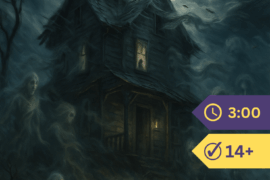
Bridges wrote across a wide range of poetic forms, from lyric verse and drama to longer philosophical works. His poetry frequently engages with nature, atmosphere, and spiritual states of mind, often filtered through precise, restrained observation rather than emotional excess. Low Barometer is a striking example of this sensibility — the poem uses the physical force of a winter storm, with gale winds rattling chimneys and clouds racing across the moon, as the backdrop for an exploration of the darker, more irrational forces lurking beneath human consciousness. The controlled stanza form holds steady even as the imagery grows unsettling, a tension characteristic of Bridges’ style.
His poem Noel: Christmas Eve 1913 shows a quieter but equally deliberate craft. Written in a form that echoes Old English and medieval verse, it records a solitary night walk on Christmas Eve, with distant church bells drifting across a frost-still valley. The poem was composed at a moment when Europe stood on the edge of catastrophic change, and its mood of serene, fragile beauty carries an understated weight. Bridges became Poet Laureate that same year, 1913, making the poem a quietly significant piece in his body of work.
Beyond his own verse, Bridges made a lasting contribution to English literary culture by championing the work of his friend Gerard Manley Hopkins, whose experimental poems Bridges edited and published posthumously in 1918 — introducing one of the most influential voices in modern poetry to a wider readership. His own late masterwork, The Testament of Beauty (1929), a long philosophical poem in loose alexandrines, became a surprise bestseller in his final years. Robert Bridges occupies a distinctive place in English literary history: a poet of classical discipline working through an age of rapid modernist change, whose influence extended well beyond his own carefully measured lines.