
Richard Harris Barham
Dive into Richard Harris Barham’s complete verse tales and gothic poems — read them online for free, filter to discover your favorites, or explore our article to learn more.
Richard Harris Barham (1788–1845) was an English clergyman, novelist, and comic poet, best known for writing under the pen name Thomas Ingoldsby. Born in Canterbury, Kent, he spent much of his adult life as a minor canon at St Paul’s Cathedral in London. He occupies a distinctive place in nineteenth-century English literature as a master of humorous, macabre verse — blending Gothic atmosphere with sharp wit and a light satirical touch that set him apart from his contemporaries.
Barham is most celebrated for The Ingoldsby Legends, a collection of verse tales and prose pieces that first appeared in Bentley’s Miscellany and The New Monthly Magazine during the 1830s and 1840s. The legends drew heavily on medieval folklore, hagiography, and local superstition, retelling old tales with a distinctly irreverent and comedic energy. Barham had a gift for rapid, rollicking metre and outrageous rhyme schemes, which gave even his darkest subject matter an air of theatrical absurdity.
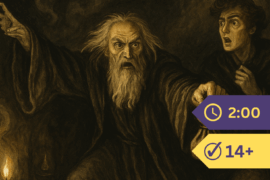
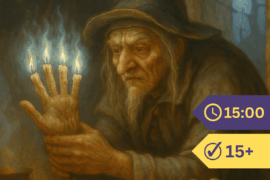
Two of his most memorable pieces illustrate this quality well. The Hand of Glory: The Nurse’s Story unfolds on a lone bleak moor at midnight beneath a gallows tree, conjuring a supernatural atmosphere steeped in old criminal folklore — all rendered in Barham’s characteristically driving, incantatory verse. Equally gripping is Raising the Devil: A Legend of Cornelius Agrippa, which draws on the real historical figure of the Renaissance occultist Heinrich Cornelius Agrippa to spin a tale of necromancy, daring, and diabolical confrontation.
Throughout his work, Barham showed a consistent fascination with the boundary between the sacred and the sinister, the clerical and the grotesque — perhaps unsurprising in a writer who was himself a man of the cloth. His verse legends were enormously popular during his lifetime and continued to be reprinted well into the Victorian era. Though his reputation has faded somewhat since the nineteenth century, Barham remains a significant figure in the tradition of English comic and Gothic verse, and The Ingoldsby Legends endure as a vivid record of how folklore, humour, and horror could be woven together with considerable literary skill.