
O. Henry
Dive into O. Henry’s complete short stories and experience his signature twist endings — read them online for free, filter to discover your favorites, or explore our article to learn more.

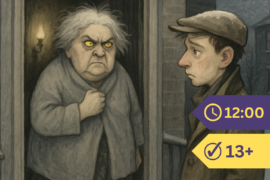
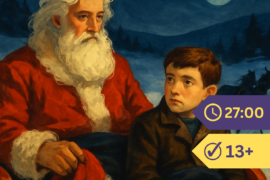
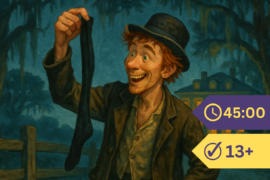

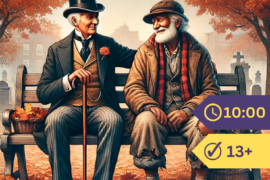



O. Henry was the pen name of William Sydney Porter (1862–1910), an American short story writer widely regarded as one of the masters of the form. Born in Greensboro, North Carolina, he lived a varied and at times turbulent life that took him from Texas to Central America and eventually to New York City, the setting that inspired much of his most celebrated work. His stories appeared prolifically in newspapers and magazines during the early twentieth century, and his output — numbering in the hundreds — made him one of the most widely read American authors of his era.
O. Henry is best known for his economical prose, his sharp eye for the lives of ordinary working people, and above all his deftly constructed twist endings. His fiction frequently explores themes of coincidence, irony, and quiet sacrifice. The Gift of the Magi, perhaps his most famous story, captures a young couple’s selfless attempts to buy each other Christmas gifts, only to render each gift useless through the very act of giving — a small tragedy that reads as a kind of grace. This ability to find profound emotion inside an everyday situation is characteristic of his best work.
Not all of O. Henry’s stories are sentimental. The Ransom of Red Chief is a comedic masterpiece in which two bumbling kidnappers find themselves utterly outmatched by their young captive, a boy so wild and exhausting that the criminals eventually pay the father to take him back. The humor is broad and the irony is perfectly calibrated. A darker register appears in The Furnished Room, a melancholy story set in the anonymous rooming houses of lower Manhattan, where a young man searches desperately for a lost love in rooms that hold the ghostly traces of countless transient lives.
O. Henry also demonstrated a talent for moral complexity and understated pathos. Hearts and Hands turns on a single act of quiet gallantry aboard a train, revealing character through what is left unsaid rather than what is spoken. Two Thanksgiving Day Gentlemen examines American tradition and class through two men whose annual ritual of generosity conceals more than it reveals. Across these stories, O. Henry consistently returned to New York’s margins — its immigrants, its working poor, its dreamers — rendering their lives with both humor and dignity.
O. Henry’s influence on the short story form has been substantial. His name became so synonymous with the surprise ending that the device is often simply called an “O. Henry ending” in literary discussion. His collected works remain a significant document of American urban life at the turn of the twentieth century, and his best stories continue to be studied and anthologized worldwide.