
Margery Williams
Dive into Margery Williams’ complete stories and fairy tales — read them online for free, filter to discover your favorites, and explore our article to learn more.
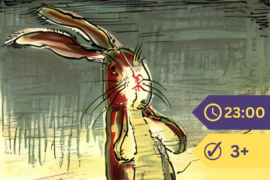
Margery Williams (1881–1944) was a British-American author best known for her work in children’s literature. Born in London, she spent much of her adult life in the United States, and her writing reflects a rare emotional depth that set her apart from many of her contemporaries. Though she wrote numerous novels and stories for both adults and children, it is her children’s fiction that has secured her lasting place in literary history.
Williams had a particular gift for exploring themes of love, identity, and what it means to become real — in the fullest, most human sense of the word. Her writing tends to be gentle yet emotionally resonant, drawing on the inner lives of toys, animals, and children to ask quietly profound questions. Her stories do not talk down to young readers; instead, they treat childhood feelings — longing, belonging, transformation — with genuine seriousness and care.
Her most celebrated work, The Velveteen Rabbit, was first published in 1922 and tells the story of a stuffed rabbit who longs to become real through the power of a child’s love. The rabbit begins as a handsome, plump toy with spotted brown and white fur and real thread whiskers, but it is his emotional journey — not his appearance — that forms the heart of the story. The narrative draws on the philosophy of the Skin Horse, a wise old toy who explains that realness is not something you are born with, but something that happens to you when you are truly loved. It is a deceptively simple premise that has resonated deeply with readers across generations.
The Velveteen Rabbit stands as one of the most emotionally intelligent works in the canon of early twentieth-century children’s literature. Its blend of nursery-room detail and philosophical warmth gave it an unusual durability, and it has remained continuously in print since its first publication. Williams’ ability to locate profound meaning within the domestic world of a child’s bedroom — and to make that meaning feel earned rather than imposed — marks her as a distinctive and important voice in the history of children’s fiction.