
Madison Julius Cawein
Dive into Madison Julius Cawein’s complete poems and discover his atmospheric verse — read them online for free, filter to discover your favorites, or explore our article to learn more.

Madison Julius Cawein (1865–1914) was an American poet born in Louisville, Kentucky, who became one of the most prolific and critically recognized voices in late nineteenth and early twentieth century American verse. Often called the “Keats of Kentucky,” Cawein was admired for his richly sensory evocations of the natural world and his command of lyrical form. During his lifetime he published more than thirty collections of poetry, earning praise from figures such as Edmund Gosse, who helped bring his work to a wider transatlantic audience.
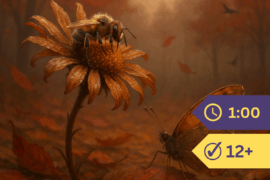
Cawein’s poetry is deeply rooted in the landscapes of the American South and the Ohio Valley region, drawing on forests, seasons, and the quiet drama of the natural world to create verse that moves between the pastoral and the gothic. His writing frequently returns to themes of decay, mystery, and supernatural suggestion, rendered through precise, image-rich language. In Hallowmas, for instance, Cawein captures the melancholy of late autumn with vivid natural detail — the last bee clinging to a dying aster, leaves falling fast, forests reddening — using the season as a frame for contemplating endings and stillness.
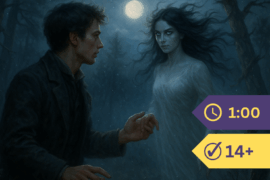
Cawein showed a particular affinity for the folklore and mood of the Halloween season. In Halloween, he sets a scene of woodland darkness and dim presence, evoking the uncanny through suggestion and atmosphere rather than explicit horror. This restrained yet evocative approach is equally present in The Vampire, where the figure of a mysterious woman is rendered through a sequence of delicate natural comparisons — moonflowers, rain-hung stars, wild blossoms — creating an image that is as beautiful as it is unsettling. These poems illustrate Cawein’s ability to blend Romantic lyricism with a darker gothic undercurrent.
Though Cawein’s reputation faded somewhat in the decades following his death, scholarly interest in his work has grown among those studying regional American poetry and the intersection of nature writing with gothic sensibility. His large and varied body of work remains a significant record of a particular strand of American literary culture at the turn of the twentieth century.