
M. R. James
Dive into M. R. James’s complete collection of ghost stories and supernatural tales — read them online for free, filter to discover your favorites, and explore our article to learn more.
Montague Rhodes James (1862–1936) was an English scholar, medievalist, and author, widely regarded as one of the greatest writers of ghost stories in the English language. Provost of King’s College, Cambridge, and later of Eton College, James brought an unusually rigorous academic mind to supernatural fiction. His stories drew directly on his deep knowledge of antiquarian manuscripts, medieval church history, and European folklore, lending them an air of scholarly authenticity that few writers in the genre have matched.
James published his most celebrated work in four collections, beginning with Ghost Stories of an Antiquary (1904). He developed a distinctive formula: a learned, often donnish protagonist — frequently an antiquary or academic — encounters some ancient object or document that disturbs a dormant evil. The horror in James is rarely explicit; it creeps in through careful accumulation of unease, half-glimpsed figures, and the wrongness of familiar settings. This restrained technique made his work influential far beyond its era.
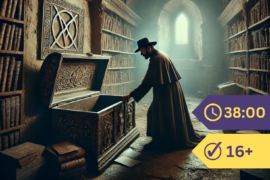
Several of the stories collected here illustrate his method perfectly. In Canon Alberic’s Scrap-book, a traveller in a remote French town purchases an illuminated manuscript and finds it carries a deeply unsettling occupant. The Mezzotint builds dread around a print whose image subtly, inexplicably changes each time it is examined. “Oh, Whistle, and I’ll Come to You My Lad” — perhaps his most famous story — follows a professor who unearths a bronze whistle on a Suffolk beach and summons something he cannot explain. Each tale transforms a mundane scholarly pursuit into a confrontation with something genuinely threatening.
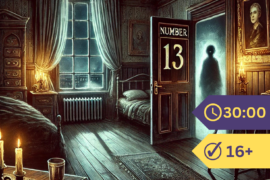
James also excelled at rooting horror in specific, researched locations. Count Magnus draws on Scandinavian travel writing and local legend to construct a tale of a malevolent Swedish nobleman whose tomb has been opened one too many times. Number 13 is set in a Danish provincial hotel where a room appears and disappears between the hours of darkness. Lost Hearts, set in a Lincolnshire country house in 1811, is among his more overtly Gothic pieces, involving a reclusive scholar and a series of missing children.
James read his stories aloud to friends by candlelight each Christmas Eve at King’s College — a tradition that shaped the intimate, conversational tone present throughout his work. His influence on twentieth-century horror is considerable, acknowledged by writers including H. P. Lovecraft and later practitioners of the ghost story tradition. His stories remain exemplary models of the form: precise in language, exact in setting, and quietly, persistently disturbing.