
Luis Coloma
Dive into Luis Coloma’s enchanting short stories and fairy tales, read them online for free, filter to discover your favorites, and explore our article to learn more.
Luis Coloma (1851–1915) was a Spanish Jesuit priest and writer, widely recognized as one of the most important Catholic literary figures of nineteenth-century Spain. Born in Jerez de la Frontera, he later joined the Society of Jesus and devoted much of his literary career to crafting stories that combined moral instruction with imaginative storytelling. His work sits at the intersection of Spanish Realism and didactic literature, reflecting both his religious convictions and his genuine warmth toward children and the poor.
Coloma wrote novels, short stories, and fairy tales aimed at a broad readership, though he is perhaps best remembered today for his children’s stories with a strong social conscience. His narratives often feature vulnerable characters — children, the destitute, small creatures — placed at the center of moral and emotional drama. Recurring themes include kindness toward the poor, the responsibilities of the powerful, and the quiet heroism found in everyday compassion.
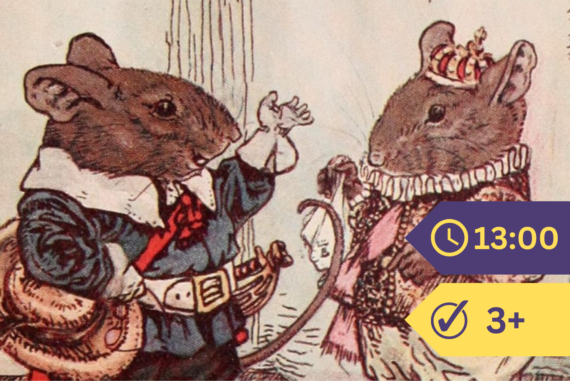
His most celebrated work for children is undoubtedly Mouse Perez, the Tooth Fairy, originally written in 1894 at the request of the Spanish royal family for the young King Alfonso XIII, who had just lost a baby tooth. In the story, the noble King Buby befriends the tiny Mouse Perez and uses his royal influence to protect mice and improve the lives of poor children — even establishing a toy factory in their honor. The tale blends fantasy with a clear social message, presenting generosity and empathy as the true marks of good leadership. It remains one of the most enduring fairy tales in the Spanish-speaking world, with Mouse Perez (Ratoncito Pérez) becoming a cultural equivalent of the Tooth Fairy across Spain and Latin America.
Beyond his fairy tales, Coloma also produced significant adult fiction, most notably the satirical novel Pequeñeces (1891), which offered a sharp critique of the Spanish aristocracy. That work caused considerable controversy upon publication but cemented his reputation as a writer of substance and moral seriousness. Across all his writing, Coloma maintained a consistent voice: observant, compassionate, and unafraid to use storytelling as a vehicle for examining how society treats its most vulnerable members. His place in Spanish literary history rests on this rare combination of popular appeal and principled vision.