
Louey Chisholm
Dive into Louey Chisholm’s fairy tales and legends, including her retellings of beloved classic stories — read them online for free, filter to discover your favorites, or explore our article to learn more.
Louey Chisholm was a British author and editor active in the late nineteenth and early twentieth centuries, best known for her work in children’s literature. She compiled and retold traditional fairy tales, myths, and legends for young readers, contributing to a broader Victorian and Edwardian tradition of making classic stories accessible to children in clear, engaging prose.
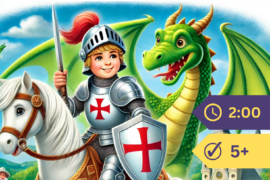
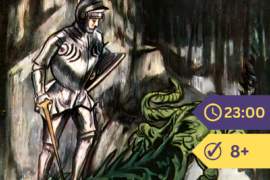
Chisholm’s retellings draw on deep roots in British and European folklore, combining a sense of wonder with straightforward, readable storytelling. Her version of St. George and the Dragon is a notable example: it opens with a spiteful fairy entering an English king’s castle and setting in motion an adventure that follows the stolen prince toward his destiny as England’s great dragon-slayer. The story blends enchantment with heroism in a way characteristic of late Victorian fairy-tale writing. Chisholm also rendered the same legend in a more condensed form, as seen in St. George and the Dragon (Short Version), which distills the narrative to its essential arc — a kind king and queen, a fairy’s mischief, and a hero’s rise — making it suitable for the youngest readers.
This dual approach — offering both a fuller, richer telling and a shorter, more accessible version of the same story — reflects Chisholm’s editorial sensitivity to her audience. Her work sits within a tradition of authors and compilers, such as Andrew Lang, who sought to preserve and popularize folklore for a new generation of readers growing up in an increasingly print-rich world.
Chisholm’s place in literary history is modest but meaningful. Her retellings helped carry legendary figures like St. George into the hands of ordinary children at a time when such stories were considered central to a child’s moral and imaginative education. The stories she worked with — rooted in national myth and chivalric legend — were seen as building blocks of cultural identity, and her careful, child-friendly prose made them widely readable.