
John Stagg
Dive into John Stagg’s haunting poems and Gothic verse — read them online for free, filter to discover your favorites, and explore our article to learn more.
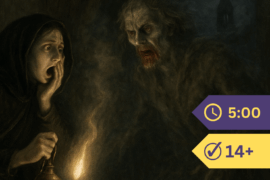
John Stagg (1770–1823) was an English poet from Cumberland, known in his lifetime as “the Blind Bard of Cumberland” due to the visual impairment he suffered from an early age. He worked as a traveling musician and peddler of his own printed verses, carving out a modest but distinctive place in the literary landscape of late 18th- and early 19th-century England. Though he never achieved mainstream literary fame, Stagg occupies a notable position in the history of Gothic and Romantic poetry.
Stagg is best remembered today for his 1810 poem The Vampyre, published in his collection Miscellaneous Poems. This work is historically significant as one of the earliest treatments of the vampire figure in English-language poetry, predating both John Polidori’s celebrated prose tale The Vampyre (1819) and the famous Gothic gathering at the Villa Diodati. Stagg’s poem draws on German folklore and the broader European superstition surrounding the undead, presenting the vampire not as an aristocratic seducer but as a terrifying revenant — a dead husband returning to drain the life from his grieving wife.
The poem opens with a wife’s desperate questions about her husband Herman’s pallor and strange nocturnal suffering, and gradually reveals a world where the dead do not rest quietly. The tone is mournful and eerie, blending folk ballad conventions with the atmospheric dread characteristic of Gothic literature. Stagg’s verse is direct and driven by a strong narrative pulse, reflecting his background as a performer who composed to be heard as much as read.
While Stagg’s output was largely regional and his readership modest, his contribution to the vampire mythology in English literature has drawn increasing scholarly attention. Literary historians studying the origins of vampire fiction frequently cite The Vampyre as an important precursor, placing Stagg in a lineage that runs from continental folklore through to the Gothic novel and eventually the modern genre of horror. His work reflects the broader Romantic-era fascination with death, the supernatural, and the boundary between the living and the dead — themes that resonated deeply in an age of graveyard poetry and Gothic fiction.
John Stagg’s legacy is a narrow but genuine one: a working-class poet from northern England who, through one remarkable poem, touched on mythology that would captivate writers and readers for centuries to come.