
John Milton
Dive into John Milton’s complete poems and works collected here — read them online for free, filter to discover your favorites, and explore our article to learn more.
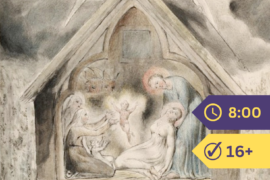
John Milton (1608–1674) was an English poet, polemicist, and intellectual, widely regarded as one of the greatest writers in the English language. Working in the seventeenth century, Milton produced a body of work that placed him alongside Chaucer and Shakespeare in the canon of English literature. He is perhaps best known for his epic poem Paradise Lost (1667), a monumental retelling of the Fall of Man drawn from the Book of Genesis, written in blank verse of extraordinary ambition and scope.
Milton was educated at Christ’s College, Cambridge, and spent much of his early career writing poetry alongside intensive private study of classical and European literature. His later years brought him into the thick of the English Civil War, during which he served as Secretary for Foreign Tongues under Oliver Cromwell’s Commonwealth government. By the time of the Restoration, Milton had lost his sight entirely, yet he composed some of his most significant work through dictation — a testament to the intellectual discipline that defined his life.
Milton’s poetry is characterized by its dense classical allusions, grand theological ambition, and a mastery of Latin-influenced syntax that gives his verse an almost architectural weight. His early works demonstrate a lyrical range quite different from the epic scale of his later writing. On the Morning of Christ’s Nativity, written in 1629 when Milton was just twenty-one, is a striking example of this early voice. The poem celebrates the birth of Christ in sweeping, cosmic terms — the arrival of the infant Son of Heaven brings harmony to a discordant world and signals the retreat of the old pagan gods. Its intricate stanzaic structure and confident theological vision already mark the young Milton as a poet of exceptional ambition.
Across his career, Milton returned repeatedly to themes of divine authority, human freedom, moral choice, and the nature of redemption. These concerns, rooted in his deep engagement with Protestant theology and classical philosophy, give his work a coherence that spans the distance between an early ode and a late epic. His influence on subsequent English poetry — from the Romantics to the Modernists — has been profound and extensively documented. William Blake, John Keats, and Percy Bysshe Shelley each grappled with Milton’s legacy in their own ways, treating him as both a model and a counterpoint. Milton remains a central figure in any serious study of English literary history.