
Jean-Henri Fabre
Dive into Jean-Henri Fabre’s complete collection of nature and science stories for children, and read them online for free — filter to discover your favorites, or explore our article to learn more about the author.








Jean-Henri Fabre (1823–1915) was a French naturalist, entomologist, and science writer, widely regarded as one of the most gifted popularizers of natural science in the nineteenth century. Born in Saint-Léons in the Aveyron region of southern France, Fabre spent much of his life in Provence, observing the insects and natural phenomena of the region with extraordinary patience and precision. He is best known for his monumental work Souvenirs Entomologiques, a ten-volume series documenting the behavior of insects, which earned him recognition across Europe and the admiration of figures such as Charles Darwin and Victor Hugo.
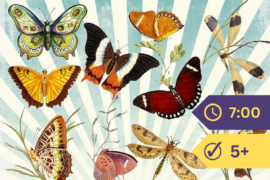
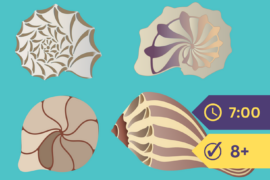
Beyond his scientific writing for adults, Fabre produced a series of educational books aimed at young readers, written in a warm, conversational style. These books frequently feature the character of “Uncle Paul,” a knowledgeable and patient uncle who guides his nephews and niece — Jules, Emile, and Claire — through questions about the natural world. The format blends storytelling with instruction, making complex scientific ideas accessible to children without sacrificing accuracy. In Butterflies, the wonder of insect life is conveyed through vivid descriptions of color and wing pattern, while Shells uses a drawer full of collected specimens as a starting point for a lesson on marine life and geography.
Fabre’s subjects range widely across the natural sciences. Atmospheric phenomena are explored in stories such as Clouds, The Storm, and Thunder and Lightning, in which Uncle Paul explains the physics of weather to curious children seated in a garden or caught out on a country walk. Geological and geophysical topics appear in Earthquakes and The Subterranean Furnace, where discussions of underground heat and seismic activity are grounded in everyday observation. The sea and its properties are covered in The Sea and Waves, Salt and Seaweed, stories that open with simple questions from the children and unfold into clear, factual explanations.
Fabre’s entomological expertise surfaces consistently even in his children’s writing. In The Wasp and the Cricket, the behavior of the Yellow-winged Wasp is described with the same careful attention to detail that characterizes his scientific memoirs. His ability to move between precise observation and engaging narrative made his children’s books influential in science education in France during the late nineteenth and early twentieth centuries. Fabre died in 1915 in Sérignan-du-Comtat, leaving behind a body of work that remains a landmark in the literature of natural history.