
Janet Little
Dive into Janet Little’s complete poems and stories — read them online for free, filter to discover your favorites, or explore our article to learn more.
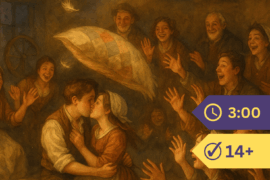
Janet Little (1759–1813) was a Scottish poet, sometimes known by the nickname “The Scotch Milkmaid,” a title that reflected both her humble working-class origins and the pastoral world she inhabited. Born in Nithsdale, Ayrshire, she spent much of her life as a domestic servant, eventually working on a dairy farm — circumstances that set her apart from the educated literary figures of her era, yet did not diminish the sharpness or ambition of her verse. She was a contemporary of Robert Burns, with whom she corresponded and whom she admired openly, and her poetry sits within the broader tradition of late eighteenth-century Scottish vernacular writing.
Little wrote largely in the Scots dialect, drawing on the rhythms and idioms of rural life in southwest Scotland. Her poems engage with themes of nature, folk custom, social class, and the particular experiences of women navigating a world that offered them little formal recognition as writers. She published a collection of her verse in 1792, supported by subscription — a common route for poets of modest means seeking to reach a wider readership. Her work blends wit, observation, and a quietly confident voice that does not shy away from gentle satire aimed at social pretension and affectation.
In On Halloween, Little captures the spirit of the traditional Scottish festival with characteristic energy, contrasting the pleasures of the rural commonfolk with the more artificial entertainments pursued by the fashionable classes. The poem’s tone is playful yet pointed, celebrating the honest jollity of country life while poking fun at those who seek amusement in courts and theatres. It reflects her recurring interest in the lives of ordinary people and the seasonal rhythms that shaped their world.
Janet Little occupies a small but notable place in Scottish literary history as one of the few working-class women of her time to publish a substantial body of verse. Her willingness to write in Scots vernacular, to claim a literary identity despite her social station, and to engage critically with the world around her make her a figure of genuine interest for anyone studying the breadth of eighteenth-century Scottish poetry beyond its most celebrated names.