
J.R.R. Tolkien
Dive into J.R.R. Tolkien’s stories and poems collected here — read them online for free, filter to discover your favorites, and explore our article to learn more.
J.R.R. Tolkien (1892–1973) was an English author, poet, and philologist, best known for creating some of the most detailed and influential works of fantasy literature in the twentieth century. A professor of Anglo-Saxon and English Language and Literature at Oxford University, Tolkien brought to his writing a deep scholarly grounding in medieval languages, mythology, and Old English poetry. His major works, including The Hobbit and The Lord of the Rings, established a richly constructed fictional world known as Middle-earth, complete with its own languages, histories, and peoples.
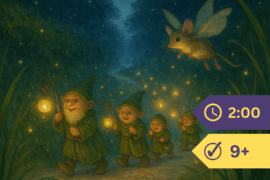
What is less widely known is that Tolkien’s imaginative writing began long before his novels. His early poems reveal the same fascination with folklore, hidden creatures, and enchanted landscapes that would later define Middle-earth. Goblin Feet, written in 1915, is one such early work — a lyrical poem evoking the mysterious world of fairies, goblins, and night-wandering creatures. With its dancing rhythms and vivid imagery of lantern light and sighing hedgerows, the poem reflects the young Tolkien’s debt to the Victorian and Edwardian fairy tradition, even as it hints at the more fully realized mythologies he would later develop.
Tolkien himself later expressed ambivalence about “Goblin Feet,” feeling it belonged too much to a sentimental fairy-tale tradition he had moved beyond. Yet the poem remains a valuable early document of his developing imagination — one that shows the roots of his obsession with small, unseen beings living at the margins of the human world, a theme that would eventually grow into the hobbits and other creatures of Middle-earth.
Tolkien’s place in literary history is secure not only as a storyteller but as a builder of worlds. His academic work on Old and Middle English texts, including his landmark essay “Beowulf: The Monsters and the Critics,” reshaped how scholars understood medieval literature. His fiction, meanwhile, drew directly on that scholarship, weaving Norse myth, Anglo-Saxon legend, and original invention into narratives of enduring depth. His influence on the fantasy genre as a whole is difficult to overstate, and his early poetry offers a window into how that extraordinary creative life began.