
Hugh Lofting
Dive into Hugh Lofting’s complete stories and adventures — read them online for free, filter to discover your favorites, and explore our article to learn more.
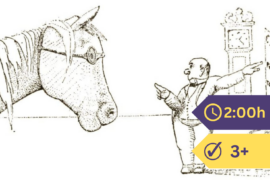
Hugh Lofting (1886–1947) was a British-American author and illustrator best known for creating Doctor Dolittle, one of the most recognizable characters in children’s literature. Born in Maidenhead, England, Lofting trained as a civil engineer and later moved to the United States, but it was his experiences during World War I that gave rise to the stories for which he is remembered. Disturbed by the suffering of animals on the front lines, he began writing illustrated letters to his children featuring a kind, animal-loving doctor — letters that would eventually become a beloved series of books.
The Doctor Dolittle series centers on John Dolittle, a physician from the small English town of Puddleby-on-the-Marsh who learns to speak the languages of animals with the help of his parrot, Polynesia. The stories blend gentle adventure, humor, and a deep respect for the natural world. In The Story of Doctor Dolittle (Full Book), readers follow the doctor from his modest beginnings in Puddleby through a sweeping journey to Africa, where he answers a distress call from sick monkeys. Along the way, the narrative touches on themes of compassion, curiosity, and the value of communication across boundaries — whether between species or cultures.
The book moves through a series of memorable episodes — money troubles that shrink the doctor’s human practice, a daring ocean crossing, an encounter with an African king, and the famous pushmi-pullyu, a two-headed creature the doctor brings back to England. Lofting illustrated the original editions himself, giving the books a distinctive hand-drawn quality that matched their warmhearted, unhurried storytelling style.
The Story of Doctor Dolittle, first published in 1920, was the beginning of a series that would span more than a dozen volumes. The second book in the series, The Voyages of Doctor Dolittle, won the Newbery Medal in 1923, cementing Lofting’s place in the canon of English-language children’s literature. His work is notable for placing empathy — particularly toward animals and outsiders — at the center of adventure storytelling, a quality that distinguished the series from much of the children’s fiction of its era.