
Homer
Dive into Homer’s complete stories and epic poems, from heroic battles to comic animal tales — read them online for free, filter to discover your favourites, or explore our article to learn more.
Homer is the name traditionally attributed to the ancient Greek poet credited with composing two of the most influential works in Western literature: the Iliad and the Odyssey. Scholars generally place his activity somewhere in the 8th century BCE, though the exact dates and even the question of whether Homer was a single historical individual remain subjects of ongoing academic debate. What is widely accepted is that the works bearing his name represent the foundation of the Greek literary tradition and have shaped storytelling, poetry, and culture across more than two and a half millennia.
The major epics attributed to Homer deal with the events surrounding the Trojan War and its aftermath. The Iliad focuses on the wrath of the Greek hero Achilles and the brutal realities of warfare, while the Odyssey follows the cunning Odysseus on his long, perilous journey home. Both works are composed in dactylic hexameter and draw on a rich tradition of oral poetry, with repeated epithets, stock phrases, and episodic structure that reflect their roots in spoken performance rather than written composition.
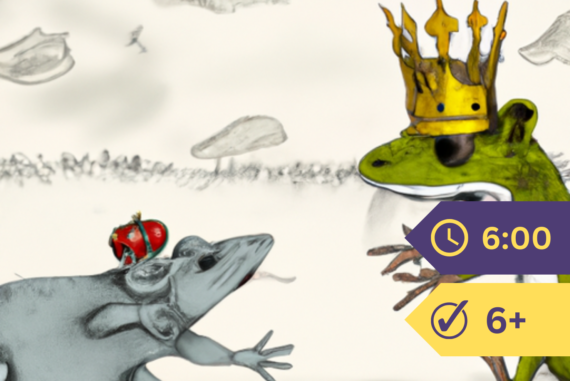
Beyond these two great epics, a number of shorter or lighter works have been associated with Homer’s name over the centuries, though scholars consider most of them pseudepigraphical — works written by others and later attributed to the famous poet. One such text is the Battle of Frogs and Mice, a comic mock-epic known in Greek as the Batrachomyomachia. This short poem parodies the grand heroic style of the Iliad, transplanting the conventions of epic warfare onto a ridiculous conflict between frogs and mice. The story opens with a frog king and a mouse forming an unlikely bond, which soon spirals into a full-scale battle complete with divine intervention — all rendered in the elevated language of serious epic poetry, played entirely for comic effect.
The Battle of Frogs and Mice is a useful illustration of how well-established the Homeric style had become in the ancient world: it was recognisable enough to be effectively mocked. The poem also demonstrates that ancient audiences appreciated literary humour and self-aware parody, not only solemn heroic verse. Whether or not Homer himself composed it — and most scholars believe he did not — the work has travelled through history under his name, testament to the enormous cultural authority that name carried in antiquity and beyond.
Homer’s place in literary history is difficult to overstate. Figures as varied as Plato, Virgil, Dante, and James Joyce engaged directly with the Homeric tradition, adapting, challenging, or expanding on it. The epics attributed to him remain among the most widely read and studied texts in the world, and even works loosely connected to his name, such as the comic Battle of Frogs and Mice, continue to find readers drawn to their energy, wit, and enduring humanity.