
Henry van Dyke
Dive into Henry van Dyke’s complete stories, poems, and essays, and explore our article to learn more about this thoughtful American author.



Henry van Dyke (1852–1933) was an American author, educator, and Presbyterian minister whose literary output spanned poetry, short fiction, essays, and religious writing. Born in Germantown, Pennsylvania, he served as a professor of English literature at Princeton University for many years and was appointed U.S. Minister to the Netherlands and Luxembourg under President Woodrow Wilson. His dual identity as a man of letters and a man of faith shaped nearly everything he wrote.
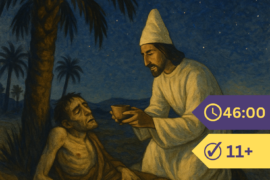
Van Dyke is perhaps best remembered for his novella The Story of the Other Wise Man (1895), a contemplative tale imagining a fourth Magi who never reaches Bethlehem because he continually gives away the jewels meant as gifts for the Christ child. The story exemplifies his characteristic blend of gentle moral reflection, vivid storytelling, and spiritual warmth. His collection Fisherman’s Luck and the nature essays gathered in Little Rivers reveal another side of his sensibility — a deep love of the outdoors, particularly fly fishing and the quiet landscapes of the northeastern United States and Canada.
His poetry, collected in volumes such as The Poems of Henry van Dyke, drew on classical forms and hymn-like cadences. He wrote the words to the well-known hymn “Joyful, Joyful, We Adore Thee,” set to the melody of Beethoven’s Ninth Symphony. Across his fiction and essays, recurring themes include the search for meaning in ordinary life, the redemptive power of nature, and the quiet courage required to live with integrity.
Van Dyke occupied a notable position in American letters at the turn of the twentieth century — respected both in academic circles and among general readers. He was a founding member of the National Institute of Arts and Letters and served as its president. Though his popularity faded somewhat after his death, his most enduring works continue to be read for their craftsmanship, their moral seriousness, and their graceful prose style.