
Helen Maria Williams
Dive into Helen Maria Williams’s poems and verses — read them online for free, filter to discover your favorites, or explore our article to learn more about the author.
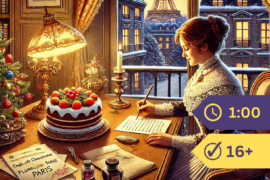
Helen Maria Williams (1759–1827) was a British poet, novelist, and political writer who spent much of her adult life in France, becoming one of the most prominent English-language voices to witness and write about the French Revolution firsthand. Born in London and raised partly in Berwick-upon-Tweed, she established herself as a poet of sensitivity and moral earnestness before moving to Paris in 1790, where she would remain for the rest of her life. Her position as an expatriate observer gave her writing a distinctive dual perspective — rooted in English literary tradition yet deeply shaped by the turbulence of continental Europe.
Williams was known in her own time both for her sentimental poetry and for her multi-volume Letters Written during a Tour through Switzerland and her extensive accounts of revolutionary France. Her verse is characterised by warmth, personal feeling, and a keen attention to the emotional textures of everyday life. Even in a poem ostensibly about a baked good, she reveals this gift: in To Mrs. K____, On Her Sending Me an English Christmas Plum-Cake in Paris, the arrival of a familiar treat from home becomes an occasion for reflection on memory, friendship, and the ache of distance. The poem moves with ease between playful whimsy and genuine tenderness, treating the humble Christmas cake as a vessel of cultural belonging and affection.
That poem is a fine example of Williams’s broader approach to lyric writing: the domestic and the political, the intimate and the historical, are rarely far apart in her work. Writing from Paris during years of extraordinary upheaval, she transformed personal correspondence and private sentiment into literature with a wider social resonance. Her circle in Paris included leading intellectuals and reformers, and her home became a gathering point for English-speaking radicals and liberals on the Continent.
Though Williams’s reputation faded considerably in the nineteenth century — partly due to her radical sympathies and her unconventional personal life — scholars have increasingly recognised her as a significant figure in the literature of sensibility, Romantic-era writing, and early feminist thought. Her work bridges the late eighteenth-century culture of feeling and the more politically charged atmosphere of the 1790s, occupying a distinctive place in the history of both British and European literature.