
H. P. Lovecraft
Dive into H. P. Lovecraft’s complete short stories and poems — read them online for free, filter to discover your favorites, and explore our article to learn more about the author.
H. P. Lovecraft (1890–1937) was an American author of horror, weird fiction, and dark fantasy, widely regarded as one of the most influential writers in those genres during the twentieth century. Born in Providence, Rhode Island, he spent much of his life there and drew on its atmosphere — old colonial streets, crumbling architecture, and a sense of ancient, unknowable history — in shaping his literary imagination. Though he found only modest recognition during his lifetime, his reputation grew enormously after his death, and his concepts have deeply shaped modern horror literature, film, and popular culture.
Lovecraft is best known for developing a strain of horror rooted not in the supernatural per se, but in what he called “cosmic indifferentism” — the idea that the universe is vast, ancient, and utterly indifferent to human existence. His fiction frequently places ordinary men and women in contact with forces or entities so alien and incomprehensible that the encounter leads to madness or despair. This philosophical underpinning gives his work a distinctive quality that separates it from more conventional ghost stories or gothic horror of the same era.
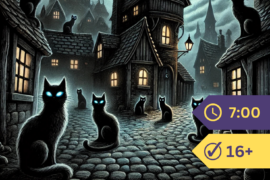
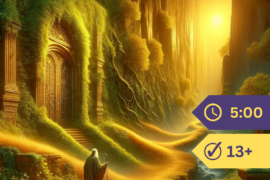
Among his shorter works, The Cats of Ulthar offers a gentler entry point into his fictional universe. Set in the mythical town of Ulthar beyond the river Skai, it belongs to his “Dream Cycle” — a series of tales set in an oneiric, secondary world drawn from the narrator’s dreams. The story explains, through quiet legend, why no man in Ulthar is permitted to kill a cat. Ex Oblivione similarly inhabits the Dream Cycle, following a narrator who retreats ever deeper into drug-induced visions of a walled garden and a mysterious gate, seeking oblivion from the unbearable weight of waking life. Both stories display Lovecraft’s highly ornate prose style, his fondness for archaic diction, and his recurring preoccupation with the boundary between consciousness and dissolution.
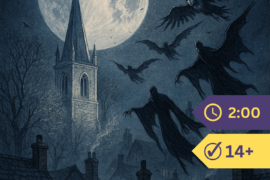
Lovecraft also wrote poetry throughout his life, and Hallowe’en in a Suburb is a characteristic example — a vivid verse portrait of a moonlit New England village on Halloween night, populated with vampires, harpies, and half-glimpsed shadows. It demonstrates his ability to evoke dread and atmosphere in compressed, musical form, channeling the same imagery found in his prose into strict verse structures.
Lovecraft’s legacy rests on the breadth and coherence of the imaginative world he constructed across his fiction and poetry. His influence is visible in the work of authors such as Stephen King, Ramsey Campbell, and China Miéville, and the term “Lovecraftian” has entered the literary lexicon as shorthand for a particular brand of cosmic, existential dread. His shorter works, in particular, remain essential documents in the history of American weird fiction.