
H. H. Munro (Saki)
Dive into H. H. Munro’s complete short stories — read them online for free, filter to discover your favourites, and explore our article to learn more about Saki.


H. H. Munro, better known by his pen name Saki, was a British writer born in 1870 in Akyab, Burma, and raised in England. He is widely regarded as one of the masters of the short story form in Edwardian literature, celebrated for a prose style that combines sharp wit, dark irony, and a keen satirical eye for the social conventions of the English upper classes. His work appeared regularly in newspapers and periodicals in the early twentieth century, and his stories have remained a significant reference point in the tradition of British comic and satirical writing.
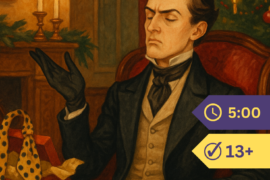
Saki’s fiction operates in a peculiar register — simultaneously elegant and unsettling, polite on the surface while quietly subversive beneath. Many of his stories are set in the drawing rooms and country houses of Edwardian England, populated by bored aristocrats, self-important aunts, and precocious young men who speak in epigrams. His recurring character Reginald, a languid and sardonic dandy, appears in several early sketches, including Reginald’s Christmas Revel, in which Reginald deflates the forced cheerfulness of the festive season with characteristic disdain. The humour is dry, the observations precise, and the target — social pretension — is never far from sight.
Yet Saki could also move into considerably darker territory. Sredni Vashtar is perhaps his most celebrated single story, and a stark contrast in tone to the Reginald sketches. It follows Conradin, a sickly ten-year-old boy who harbours a secret and fervent devotion to a polecat-ferret he has elevated to the status of a god. The story is a study in powerlessness, imagination, and repressed fury — qualities that give it a lasting psychological weight well beyond its brief length. It is frequently anthologised and studied as an example of how the short story form can carry genuine menace within a deceptively compact frame.
Munro was killed in action in France in November 1916 during the First World War, having enlisted despite being over the standard age for service. His death cut short a career that had already produced two major short story collections, a novel, and a body of political satire. His literary reputation rests firmly on the short story, a form he shaped with an originality that influenced writers across the twentieth century.