
F. E. Mann
Dive into F. E. Mann’s collection of short stories and discover delightful tales for young readers — explore our article to learn more about the author and their work.
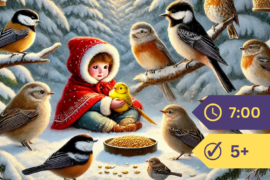
F. E. Mann was an author of children’s literature whose work appeared in the early twentieth century. Writing in a gentle, nature-focused tradition, Mann crafted short stories aimed at young readers, drawing on the natural world to tell warm and imaginative tales. Though biographical details about Mann remain sparse, the stories attributed to this author reflect a clear affection for animals and the rhythms of the seasons.
Mann’s writing is particularly notable for its use of animal characters to convey simple, joyful narratives. In The Birds’ Christmas, a lively chorus of birds — chickadees, robins, and a busy woodpecker — comes together in a scene bursting with cheerful sound and seasonal spirit. The story captures the natural world in a way that feels both observational and playful, giving each bird a distinct voice rendered through onomatopoeia and carefully chosen detail. This approach reflects a wider tradition in children’s literature of using the animal kingdom as a lens through which young readers could observe the world around them.
The themes in Mann’s work center on community, the changing of seasons, and the small wonders found in nature. Rather than relying on moralistic frameworks common to many children’s stories of the era, Mann’s narratives lean toward sensory delight — the sounds of birds, the feeling of a crisp winter day — inviting young readers into a moment rather than steering them toward a lesson. This makes the stories feel light and immediate, qualities that suited the short-story format well.
F. E. Mann occupies a modest but genuine place in the tradition of early twentieth-century nature writing for children, a genre that sought to nurture curiosity about the natural world through accessible, imaginative storytelling. The stories remain an interesting example of how authors of that period used seasonal and animal themes to connect young audiences with their surroundings.