
Edward Lear
Dive into Edward Lear’s complete collection of nonsense poems and whimsical stories, and read them online for free — filter to discover your favorites, or explore our article to learn more.
Edward Lear (1812–1888) was an English writer, poet, and artist best known for his pioneering work in literary nonsense. Born in London as the twentieth of twenty-one children, Lear spent much of his adult life traveling across Europe and the Mediterranean, working as an illustrative artist before finding lasting fame as the author of limericks, nonsense songs, and absurdist stories. He is widely regarded as one of the founding figures of the nonsense literature genre, and his influence can be traced through generations of authors who followed in his playfully illogical footsteps.
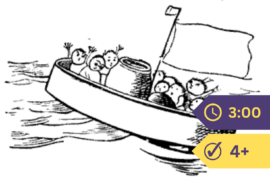
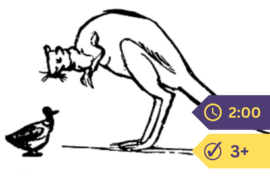
Lear’s writing is characterized by invented words, fantastical place names, and characters who exist just slightly outside the boundaries of ordinary logic. His 1846 Book of Nonsense established his reputation, but it was his longer narrative poems and prose stories that showed the full range of his imagination. Works such as The Jumblies — about peculiar creatures who sail to sea in a sieve — and The Duck and the Kangaroo capture his gift for combining gentle melancholy with comic absurdity. The recurring theme of adventurous outcasts setting off into an uncertain world appears again and again across his work.
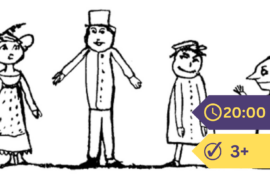
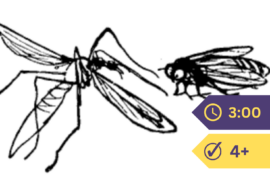
His longer prose narratives display the same inventive spirit. The Story of the Four Little Children Who Went Round the World sends four young travelers on an elaborately improbable voyage, while The Seven Families of Pipple-Popple unfolds in the invented land of Gramble-Blamble with darkly comic consequences. Even smaller domestic scenes receive the Lear treatment: in The Nutcrackers and the Sugar-Tongs, two kitchen utensils escape their mundane lives in search of freedom, and in The Daddy Long-legs and the Fly, two unlikely companions navigate friendship and longing in the tiny town of Bumbledom.
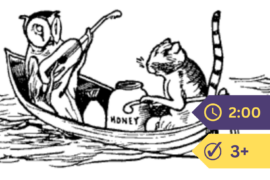
Lear never married and traveled extensively throughout his life, experiences that lent his writing a persistent sense of wanderlust and longing beneath its comic surface. His most famous poem, widely known as The Owl and the Pussycat, and rendered here as The Owl and the Cat, remains one of the most quoted poems in the English language. Lear died in San Remo, Italy, in 1888, leaving behind a body of work that continues to be studied both as children’s literature and as a serious contribution to English poetry and the art of comic verse.