
E.T.A. Hoffmann
Dive into E.T.A. Hoffmann’s complete fairy tales and fantastical stories, read them online for free, filter to discover your favorites, and explore our article to learn more.
Ernst Theodor Amadeus Hoffmann (1776–1822) was a German Romantic author, composer, and artist, widely regarded as one of the most influential figures in European fantastic literature. Writing during the early nineteenth century, Hoffmann brought a distinctly dark and imaginative quality to German Romanticism, blending the uncanny with the everyday in ways that deeply influenced later writers such as Edgar Allan Poe, Nikolai Gogol, and Franz Kafka.
Hoffmann worked as a lawyer by profession, yet his creative output was extraordinary in both scope and originality. He composed operas and music criticism — famously writing about Beethoven — and produced a body of literary work rich in psychological depth and supernatural atmosphere. His stories often sit on the unsettling boundary between dream and reality, sanity and madness, the mechanical and the human.
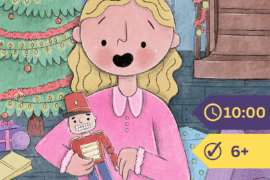
His most enduring contribution to world literature is arguably The Nutcracker and the Mouse King, published in 1816. The story follows young Maria, who on Christmas Eve receives a nutcracker doll as a gift and is soon drawn into a nocturnal battle between toy soldiers and the menacing Mouse King. The tale moves between the warmth of a festive household and a strange, magical world that comes alive after dark — a characteristic tension in Hoffmann’s writing between the familiar and the fantastical. The story later became the basis for Tchaikovsky’s celebrated ballet, cementing its place in global cultural history.
Hoffmann’s broader body of work includes story collections such as Fantasiestücke in Callots Manier and Die Serapionsbrüder, as well as the novel The Devil’s Elixirs. Recurring themes throughout his fiction include doppelgängers, automata, obsessive artists, and the thin line separating genius from madness. His tale The Sandman, in which a young man becomes dangerously enchanted by a mechanical doll, remains one of the most studied works of Gothic and Romantic literature.
Hoffmann died at the age of forty-six, leaving behind a legacy that extended well beyond his lifetime. His influence on Romantic and Gothic fiction, as well as on opera and music criticism, positioned him as a central figure in nineteenth-century German culture and a writer whose unsettling imagination continues to resonate in literature and the arts.