
E. Nesbit
Dive into E. Nesbit’s complete stories and poems — read them online for free, filter to discover your favorites, or explore our article to learn more.

E. Nesbit (1858–1924) was an English author and poet whose work helped shape the landscape of children’s literature in the late Victorian and Edwardian eras. Born Edith Nesbit in London, she wrote prolifically across several genres, but it is her children’s fiction that secured her lasting reputation. Her stories are notable for combining everyday family life with moments of adventure, and she was among the first writers to portray child characters with genuine wit, independence, and emotional depth.
Nesbit’s writing is grounded in realism while remaining warmly imaginative. She had a particular gift for capturing the rhythms of childhood — the petty squabbles, the loyalties, the sudden bursts of courage — and setting them against vividly observed English landscapes. Her work also extended to poetry, and pieces such as The Three Kings reveal a lyrical, contemplative side to her writing, drawing on biblical imagery and a strong sense of atmosphere to evoke the journey of the Magi.
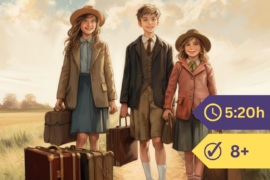
The Railway Children remains her best-known and most enduring work. First published in 1906, it follows three siblings — Roberta, Phyllis, and Peter — who move with their mother to a house in the Yorkshire countryside after their father mysteriously disappears. The novel unfolds through a series of episodes in which the children befriend a kindly old gentleman, help rescue prisoners, and ultimately work to clear their father’s name. Nesbit’s storytelling is episodic and humane, with each chapter building a portrait of resilience, community, and quiet moral courage.
Nesbit’s influence on children’s literature has been widely acknowledged by later writers, including C.S. Lewis and P.G. Wodehouse, both of whom cited her as a formative influence. Her ability to write children as full, credible human beings — rather than idealized or cautionary figures — marked a significant shift in how young readers were addressed in fiction. Her works occupy a distinctive place at the intersection of the Victorian moral tale and the modern adventure story, and they continue to be read and studied as foundational texts in the genre.