
E. Boyd Smith
Dive into E. Boyd Smith’s complete collection of illustrated children’s books and stories — read them online for free, filter to discover your favorites, and explore our article to learn more.
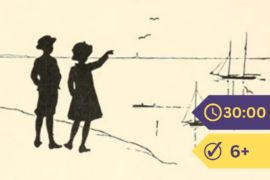
E. Boyd Smith (1860–1943) was an American author and illustrator whose work occupies a notable place in the history of early twentieth-century children’s literature. Born in St. John, New Brunswick, Canada, and later based in the United States, Smith became known for his richly detailed, warmly rendered illustrations that brought rural American life, maritime settings, and the natural world vividly to life for young readers.
Smith was unusual in that he both wrote and illustrated his own books, giving his work a distinctive visual and narrative unity. His illustrations drew on close observation of real places and people, lending his stories a grounded, authentic quality that set them apart from more fantastical children’s fare of the era. His books often centered on the experiences of children navigating outdoor environments — farms, coastlines, harbors — guided by knowledgeable older figures who passed down practical wisdom and a sense of wonder.
This approach is well represented in Bob and Betty’s Summer with Captain Hawes, in which two children spend a summer on the coast under the care of Captain Ben Hawes, a retired sailor with forty years of seafaring experience. The story unfolds across several chapters, each drawing the reader deeper into the rhythms of coastal life — boats, tides, and the practical knowledge of a man shaped by the sea. Captain Hawes serves as a classic Smith figure: an experienced, quietly authoritative adult whose world opens up richly to the children in his care.
Smith published a number of books in this vein during the early decades of the twentieth century, and his illustrated volumes were widely read in American households of the time. His work reflects a broader cultural interest in connecting children to the natural and working world around them, presenting that world through careful, affectionate illustration and straightforward, engaging prose. His legacy endures primarily through his illustrated books, which remain valued examples of early American children’s publishing.