
D. H. Lawrence
Dive into D. H. Lawrence’s complete stories and novels, and explore our article to learn more about the author — read online for free and filter to discover your favorites.
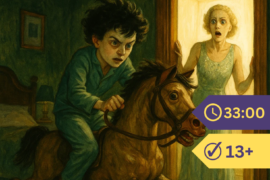
D. H. Lawrence (1885–1930) was an English novelist, short story writer, poet, and essayist, widely regarded as one of the most significant and controversial literary figures of the early twentieth century. Born in Eastwood, Nottinghamshire, to a coal miner father and a schoolteacher mother, Lawrence drew heavily on his working-class background and his experience of the tension between industrial England and the natural world. His work explored human psychology, sexuality, class conflict, and the relationship between modern civilization and instinct with an intensity that was groundbreaking for his era.
Lawrence’s literary output was vast and varied. His novels, including Sons and Lovers, The Rainbow, Women in Love, and Lady Chatterley’s Lover, pushed against the social and moral constraints of his time, earning both fierce admiration and official censorship. Lady Chatterley’s Lover, written in 1928, was banned in several countries for decades due to its frank treatment of sexuality and class, and its eventual publication in unexpurgated form became a landmark moment in the history of literary freedom.
Beyond his novels, Lawrence was a prolific writer of short fiction. His stories often examine the emotional lives of ordinary people — miners, farmers, women navigating marriage and desire — with close psychological attention and vivid sensory detail. His prose style is distinctive: rhythmic, almost incantatory at times, shaped by a deep attentiveness to mood and physical environment. The natural world, particularly the English countryside and the landscapes of Italy and New Mexico where Lawrence lived during his years of self-imposed exile, frequently serves as an active force in his narratives rather than mere backdrop.
Lawrence spent much of his adult life traveling — through Europe, Australia, the Americas, and Mexico — and these experiences profoundly shaped his writing. His later works reflect an increasingly searching, sometimes mystical engagement with questions of modern identity and the loss of vital, instinctual life under industrialism. He also wrote travel essays, literary criticism, and a substantial body of poetry, demonstrating a restless creative intelligence that resisted easy categorization.
Lawrence died of tuberculosis in 1930 at the age of 44, leaving behind a body of work that continued to provoke debate long after his death. His influence on twentieth-century literature is considerable, particularly in his treatment of interiority, sexuality, and the complexities of human relationships. Today he is recognized as a writer of exceptional power and originality whose work remains a vital part of the English literary canon.