
Charlotte Perkins Gilman
Dive into Charlotte Perkins Gilman’s complete stories and writings — read them online for free, filter to discover your favorites, and explore our article to learn more.
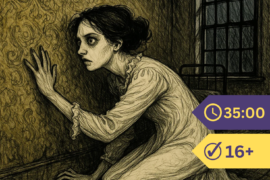
Charlotte Perkins Gilman (1860–1935) was an American author, lecturer, and social reformer, widely regarded as one of the most influential feminist intellectuals of the late nineteenth and early twentieth centuries. Born in Hartford, Connecticut, she produced an extensive body of work spanning fiction, poetry, and nonfiction that challenged the social and economic structures shaping women’s lives in her era.
Gilman is perhaps best known for her short story “The Yellow Wallpaper” (1892), a first-person psychological narrative in which a woman slowly descends into mental breakdown while confined to a room by her physician husband. The story drew directly on Gilman’s own experience with the rest cure prescribed by neurologist S. Weir Mitchell and is now considered a landmark text in both American literature and feminist literary criticism. Its unflinching examination of women’s autonomy, domestic confinement, and medical authority gave it a significance that grew considerably after its rediscovery in the 1970s.
Beyond her fiction, Gilman wrote the utopian novel Herland (1915), serialized in her own magazine The Forerunner, which she wrote and published almost entirely herself from 1909 to 1916. In Herland, three male explorers discover an isolated all-female society that has functioned without men for two thousand years, allowing Gilman to examine gender roles, cooperation, and social organization through a speculative lens. Her nonfiction work Women and Economics (1898) argued that women’s financial dependence on men was both economically irrational and socially harmful, earning her an international reputation as a serious social theorist.
Gilman’s writing consistently returned to themes of women’s independence, productive labor, and the reform of domestic life. She believed that the home, as traditionally organized, kept women isolated and intellectually stunted, and she proposed cooperative kitchens and communal childcare arrangements as practical alternatives. These ideas appear not only in her essays but woven into the fabric of her fiction and poetry.
Her place in literary history was somewhat eclipsed in the decades following her death in 1935, but a major revival of scholarly interest beginning in the 1960s and 1970s restored her to prominence. Today she is studied widely in American literature, women’s studies, and the history of social thought, recognized as a writer whose work bridged the gap between nineteenth-century reform movements and twentieth-century feminism.