
Cale Young Rice
Dive into Cale Young Rice’s poems and short works — read them online for free, filter to discover your favorites, and explore our article to learn more.
Cale Young Rice (1872–1943) was an American poet and playwright, born in Dixon, Kentucky. He studied at Cumberland University and Harvard, and went on to build a quiet but respected literary career in the United States during the late nineteenth and early twentieth centuries. Though he never achieved the widespread fame of some of his contemporaries, Rice was recognized within literary circles for the lyrical precision and atmospheric intensity of his verse.
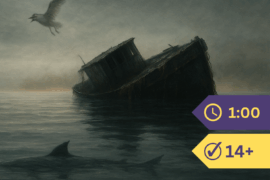
Rice’s poetry is marked by a strong sense of mood and place, often evoking remote, desolate, or otherworldly landscapes. His work draws on themes of solitude, mystery, and the boundary between the living and the dead. Haunted Seas is a characteristic example: the poem conjures a still, grey ocean where a lone bird cries and vanishes, leaving behind nothing but silence and an unsettled feeling. The imagery is spare but resonant — a glassy surface, a wavering flight, a sound described as spectral. In a few compact stanzas, Rice captures a landscape that feels suspended between the natural world and something beyond it.
Beyond poetry, Rice also wrote verse dramas and plays, exploring mythological and romantic subjects with a similar lyrical sensibility. His plays were performed and published during his lifetime, earning him a degree of critical respect, though they are less read today than his shorter poems. Throughout his career, Rice demonstrated a consistent interest in the emotional weight of landscape and the philosophical dimensions of human solitude.
Rice was married to the writer and journalist Alice Hegan Rice, author of Mrs. Wiggs of the Cabbage Patch, and the two maintained an active literary household in Louisville, Kentucky, engaging with the broader American literary culture of their era. Cale Young Rice published numerous collections of poetry over the course of his life, and his work remains a quietly distinctive contribution to American verse of the early twentieth century.