
Bidpai
Dive into Bidpai’s classic fables and moral tales — read them online for free, filter to discover your favorites, and explore our article to learn more.
Bidpai, also known as Pilpay or Vidyapati, is the legendary Indian sage and philosopher traditionally credited as the author of the Panchatantra, one of the oldest and most widely translated collections of fables in world literature. Although the historical identity of Bidpai remains a matter of scholarly debate, the name has long been associated with a body of ancient Sanskrit wisdom literature that originated in India, likely between the 3rd century BCE and the 3rd century CE. The tales attributed to Bidpai spread westward through Persian, Arabic, Hebrew, and eventually European translations, making their moral teachings among the most far-reaching in literary history.
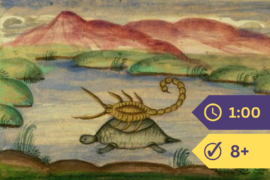
The fables of Bidpai are framed as instructional stories told by a wise brahmin to a king, using animal characters to illustrate principles of statecraft, friendship, loyalty, treachery, and human nature. The stories are notable for their layered structure — tales within tales — and for the way they use cleverly drawn animal protagonists to reflect the full complexity of human behavior. Themes of trust and betrayal are central to many of these narratives, as seen in The Scorpion and the Tortoise, in which two devoted companions make a solemn vow never to separate, only to have their bond tested by circumstance and the deeper questions of character that loyalty raises.
What distinguishes Bidpai’s fables from simple morality tales is their psychological depth. Rather than presenting straightforward lessons, the stories acknowledge ambiguity — that good intentions do not always protect against harm, and that the nature of a creature may ultimately determine the outcome of any relationship. This realism gives the tales an enduring relevance that goes well beyond their original didactic purpose.
The influence of Bidpai’s work on world literature is substantial. The Arabic translation known as Kalila wa Dimna, produced in the 8th century by Ibn al-Muqaffa, carried the stories across the Islamic world, and subsequent translations into Latin and European vernaculars introduced these Indian fables to medieval and Renaissance readers. Writers including La Fontaine drew upon this tradition when crafting their own fables. Bidpai thus occupies a foundational place in the global history of the fable as a literary form, representing a continuous thread of storytelling that connects ancient India to the modern world.