
Ben Jonson
Dive into Ben Jonson’s complete poems and dramatic works — read them online for free, filter to discover your favourites, and explore our article to learn more.
Ben Jonson (1572–1637) was an English playwright, poet, and literary critic who rose to prominence during the Elizabethan and Jacobean eras. A contemporary and rival of William Shakespeare, Jonson is widely regarded as one of the most significant figures in Renaissance English literature. He was the first English writer to consciously shape and publish his own collected works, lending his output a degree of self-awareness and literary ambition that was unusual for his time.
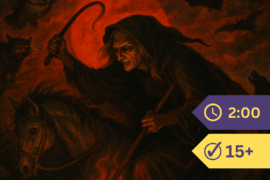
Jonson made his name primarily through his comedies and court masques — elaborate theatrical entertainments combining poetry, music, dance, and spectacular staging, typically performed for the royal court of King James I. His masques were renowned for their sophisticated verse and learned classical references, often written in collaboration with the architect and designer Inigo Jones. The Third Charm from Masque of Queens offers a vivid example of his skill in this form, conjuring a rich atmosphere of nocturnal creatures — owls, bats, toads, and frogs — through dense, incantatory verse. The Masque of Queens (1609) was one of his most celebrated court entertainments, featuring a sequence of witches whose spells and charms frame the arrival of heroic queens.
Beyond the masques, Jonson wrote sharp satirical comedies such as Volpone, The Alchemist, and Bartholomew Fair, which dissected the greed, hypocrisy, and folly of his contemporaries with biting precision. His lyric poetry, collected in works like Epigrams and The Forest, demonstrated an equally assured command of form and tone — ranging from tender elegies to pointed epigrams. Jonson’s poetry drew heavily on classical Latin models, particularly Horace and Martial, and he championed a disciplined, reasoned approach to verse in contrast to the more florid styles fashionable in his day.
Jonson’s influence on English literature extended well beyond his own lifetime. A group of younger poets who admired and gathered around him came to be known as the “Sons of Ben” or the “Tribe of Ben,” and his emphasis on craft, classical learning, and moral clarity helped shape the course of seventeenth-century English poetry. He was appointed Poet Laureate in all but official title and is buried in Westminster Abbey. His work remains a cornerstone of the English Renaissance literary canon.