
Arthur Conan Doyle
Dive into Arthur Conan Doyle’s complete collection of Sherlock Holmes short stories — read them online for free, filter to discover your favorites, and explore our article to learn more.
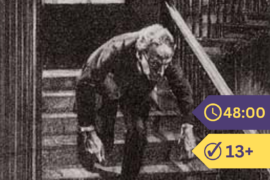
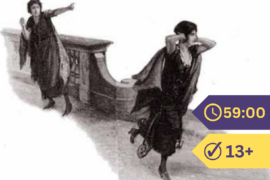
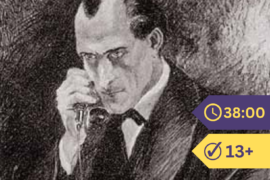
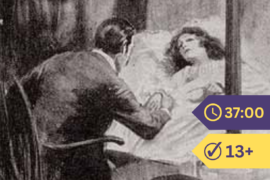
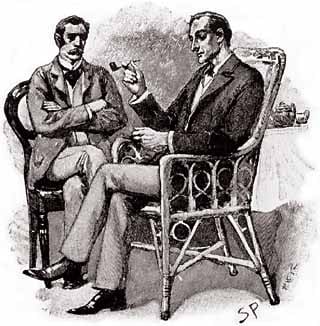
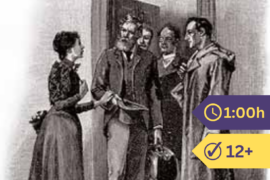
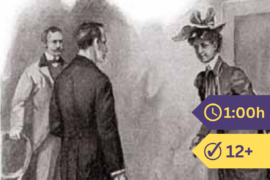
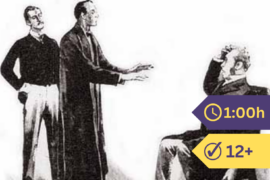


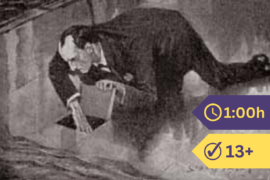





Arthur Conan Doyle (1859–1930) was a British author and physician, best known for creating one of the most recognizable fictional characters in literary history: the consulting detective Sherlock Holmes. Born in Edinburgh, Scotland, Doyle drew on his medical training and sharp observational habits to shape a detective whose method of deductive reasoning set a new standard for the mystery genre. His work had a profound and lasting influence on crime and detective fiction worldwide.
Doyle introduced Holmes and his loyal companion Dr. John H. Watson across four novels and fifty-six short stories, the majority of which were first published in The Strand Magazine during the 1890s. The stories are narrated almost entirely by Watson, whose admiring yet grounded perspective gives each case a sense of immediacy and intimacy. Baker Street, Holmes’s famous lodgings, became one of the most enduring addresses in all of English literature.
The cases collected here showcase the full range of Doyle’s storytelling craft. A Scandal in Bohemia is notable for introducing Irene Adler, the only person Holmes ever acknowledged as his intellectual equal. The Red-headed League presents one of Doyle’s most ingeniously constructed plots, built around an absurd premise that conceals a serious crime. In The Adventure of the Speckled Band, widely regarded as among the finest Holmes stories ever written, a young woman’s unexplained fear draws Holmes into a deeply unsettling investigation. The Adventure of the Blue Carbuncle unfolds against a Christmas backdrop and reveals Doyle’s gift for weaving moral complexity into seemingly light material.
Other stories here explore the darker corners of Victorian society. The Man with the Twisted Lip ventures into London’s opium dens and questions of identity, while The Five Orange Pips brings transatlantic menace to Baker Street in the form of the Ku Klux Klan. Across all these stories, Doyle balanced puzzle-driven plotting with vivid social observation, creating a portrait of late Victorian England that remains historically and literarily significant.
Doyle’s Sherlock Holmes stories are central texts in the development of modern detective fiction and continue to be studied, adapted, and celebrated more than a century after their first publication. His influence can be traced through virtually every mystery writer who followed him.