The Oak and the Woodcutters

Summary


"The Oak and the Woodcutters" is a short fable by Aesop in which a mighty Mountain Oak endures the woodcutter's axe with quiet resignation — until it discovers that the wedges splitting it apart have been carved from its own branches. The Oak's sorrow is not for the blows dealt by an outsider, but for the wound made possible by what was once part of itself. In a few precise lines, the story captures the particular sting of betrayal that comes from within.


Read Online

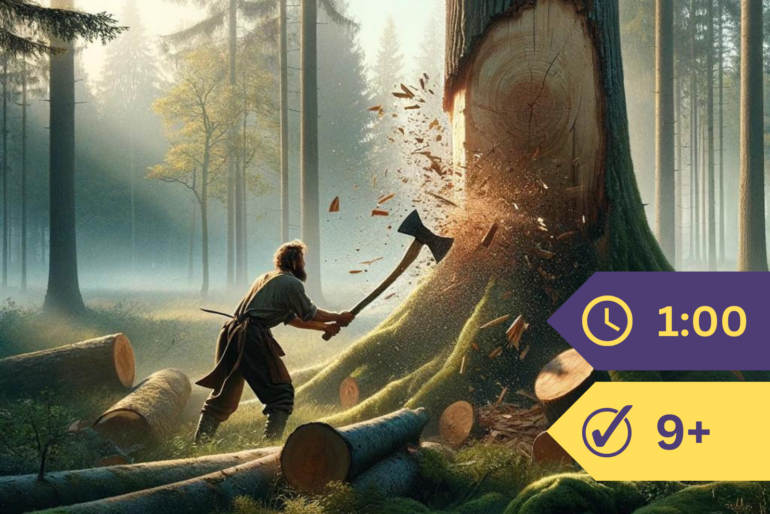
The Woodcutter cut down a Mountain Oak and split it in pieces, making wedges of its own branches for dividing the trunk. The Oak said with a sigh, “I do not care about the blows of the axe aimed at my roots, but I do grieve at being torn in pieces by these wedges made from my own branches.”


Credits

Aesop was an ancient Greek storyteller, believed to have lived around 620–560 BCE, whose fables have been retold across cultures for over two thousand years. "The Oak and the Woodcutters" is one of his shortest yet most pointed moral tales, distilling a complex human experience — the pain of inner betrayal — into a single image of a tree undone by its own branches.