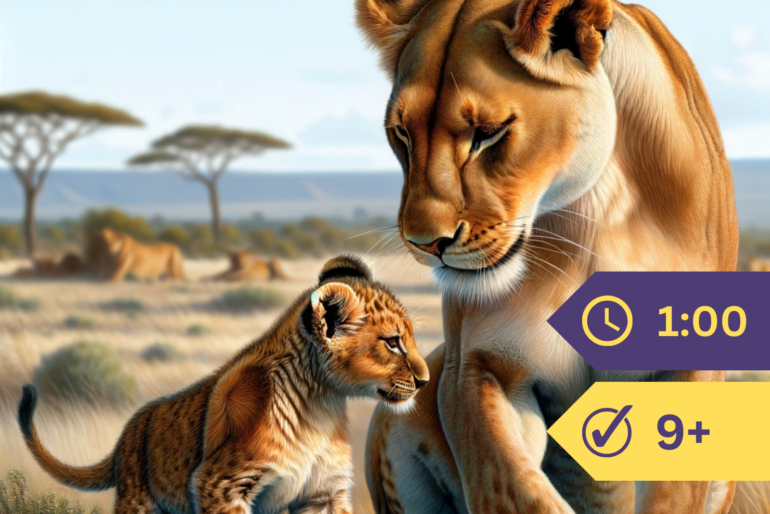
The Lioness

Summary


"The Lioness" is a short fable by Aesop in which the beasts of the field erupt into a heated argument over which animal deserves the most credit for bearing the greatest number of offspring at once. They bring their dispute to the Lioness, expecting her to be humbled. Her response is calm, sharp, and utterly disarming — she admits she bears only one cub at a time, but defends that single birth with a quiet pride that silences the crowd entirely.


Read Online

A controversy prevailed among the beasts of the field as to which of the animals deserved the most credit for producing the greatest number of whelps at a birth. They rushed clamorously into the presence of the Lioness and demanded of her the settlement of the dispute. “And you,” they said, “how many sons have you at a birth?” The Lioness laughed at them, and said: “Why! I have only one; but that one is altogether a thoroughbred Lion.”


Credits

Aesop was an ancient Greek storyteller, believed to have lived around 620–564 BCE, whose fables have endured for over two millennia through countless retellings and translations. His stories are renowned for distilling moral wisdom into compact, vivid scenes drawn from the animal world. "The Lioness" is one of his most economical tales, delivering its lesson on quality over quantity in fewer than a hundred words.