The Jackdaw and the Doves

Summary


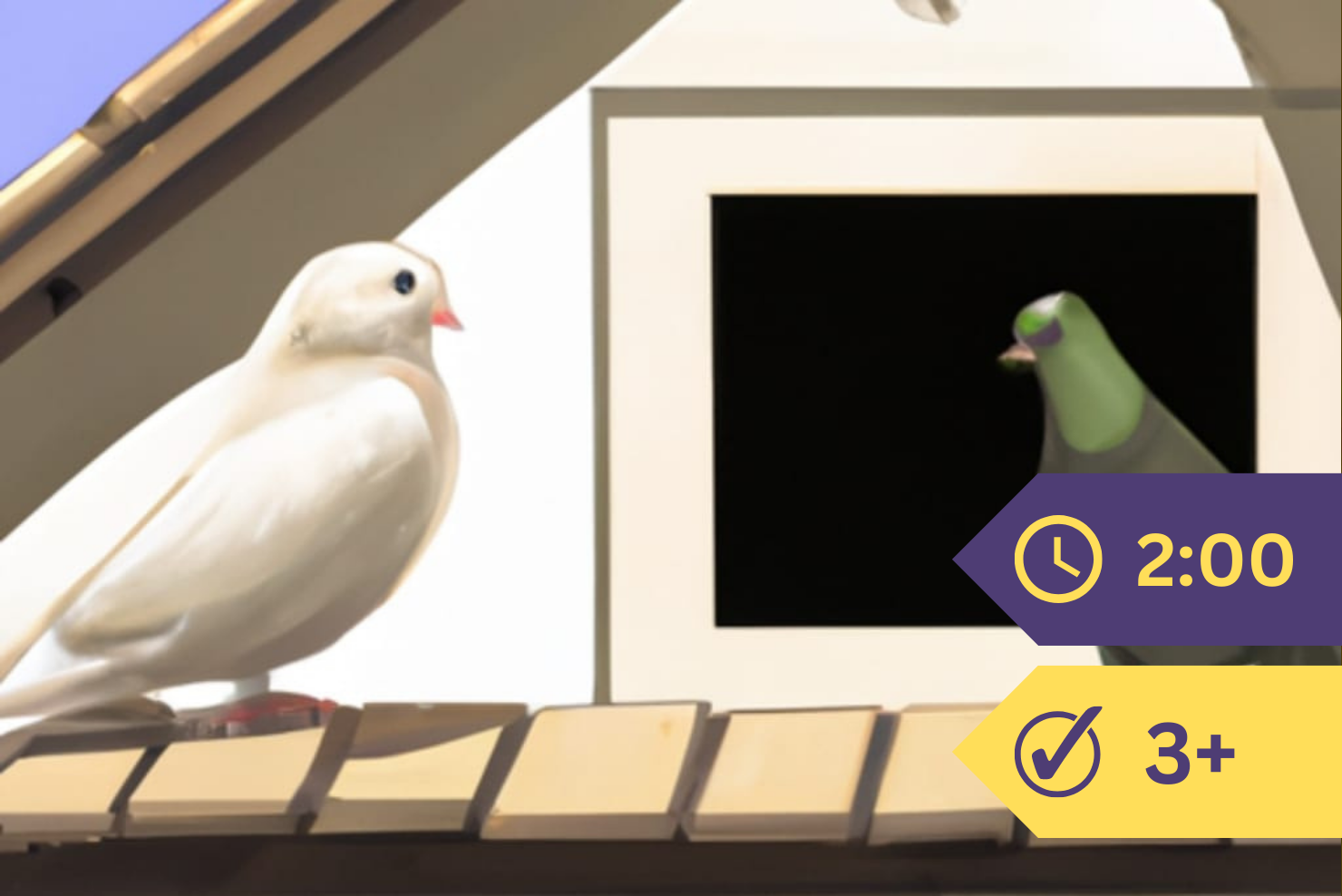
"The Jackdaw and the Doves" is a short Aesop fable about a jackdaw who paints himself white to infiltrate a dovecote and steal a share of the doves' plentiful food. His disguise holds — until he forgets himself and chatters, instantly betraying his true nature. Driven out by the doves and then unrecognized by his own kind, he ends up with nothing. The story delivers a sharp lesson about the cost of deception and the danger of chasing two goals at the expense of both.


Read Online

A Jackdaw, seeing some Doves in a cote abundantly provided with food, painted himself white and joined them in order to share their plentiful maintenance. The Doves, as long as he was silent, supposed him to be one of themselves and admitted him to their cote. But when one day he forgot himself and began to chatter, they discovered his true character and drove him forth, pecking him with their beaks. Failing to obtain food among the Doves, he returned to the Jackdaws. They too, not recognizing him on account of his color, expelled him from living with them. So desiring two ends, he obtained neither.



Credits

Aesop was an ancient Greek storyteller, believed to have lived around 620–560 BCE, whose fables have shaped moral literature across the world for over two millennia. "The Jackdaw and the Doves" is a classic example of his economy of style — the entire moral is carried in a single, swift action and its consequences, with no character wasted.